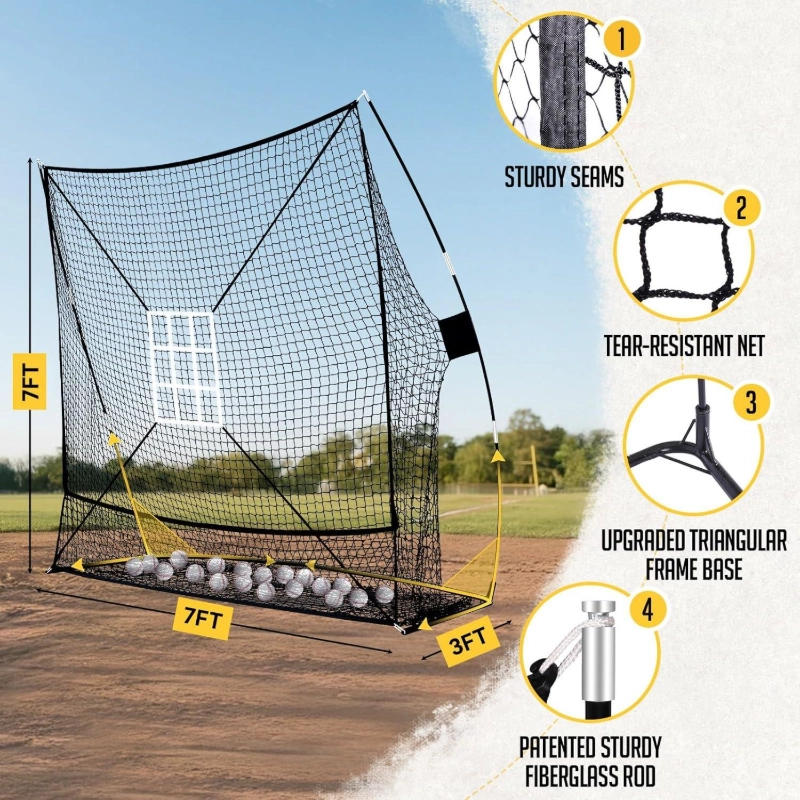
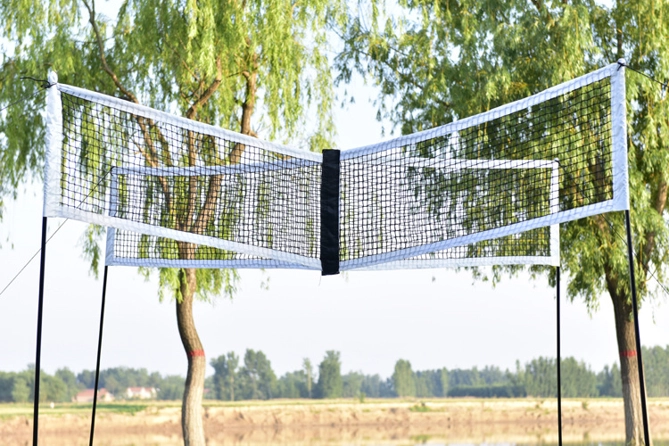
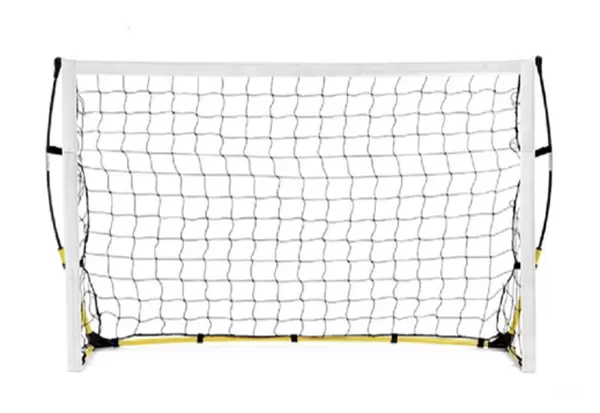
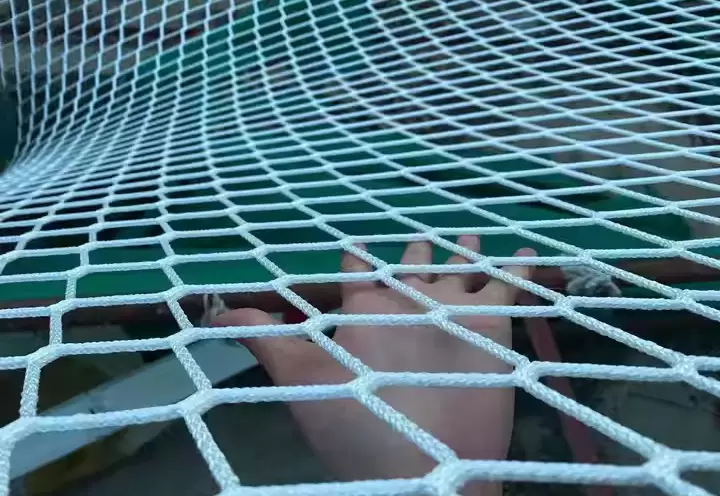
After months of high-frequency pitching drills, batting practice, and rebound throws, even well-manufactured baseball throwing nets will show signs of stress. One of the most common post-season issues reported by coaches, training facilities, and distributors is the formation of overly tight or deformed knots. These knots are not merely cosmetic; they directly affect rebound consistency, load distribution, and the long-term service life of the net.
This article focuses exclusively on how to repair tight knots on baseball throwing nets after intense seasonal training, with a practical, technical, and operations-level perspective. The recommendations below are built around the structural characteristics of professional sports nets and are fully aligned with the manufacturing standards and material systems used by Huizhou Riches Net Science & Technology Co., Ltd., a company with over 23 years of industry experience in rope-to-net production.
Why Tight Knots Form After High-Intensity Training Cycles
During seasonal training, baseball throwing nets are exposed to repeated point-load impacts. According to industry testing data from sports equipment durability studies, a single pitching station can generate 20,000–40,000 ball impacts per season, with peak localized stress concentrated at knot intersections rather than along the rope body.
Tight knots typically form due to a combination of factors:
Cyclic tensile loading that causes rope fibers to creep and contract
High-velocity impacts repeatedly striking the same rebound zone
Temperature fluctuations between indoor storage and outdoor use
Improper post-training tension release or folding methods
Even nets manufactured with tight knots and accurate dimensions—as is standard in Riches Net production—can experience knot compression over time when exposed to elite-level usage intensity.
Identifying Repairable vs. Non-Repairable Knot Damage
Before any repair work begins, it is critical to determine whether a tight knot can be safely corrected or if structural replacement is required.
Repairable knot conditions include:
Knot compression without visible fiber breakage
Localized tightening with intact rope diameter
Reduced mesh flexibility but no loss of rebound integrity
Non-repairable conditions include:
Frayed or melted fibers at the knot core
Asymmetrical knot distortion affecting adjacent meshes
Rope diameter reduction exceeding 15% at the knot point
Industry maintenance guidelines from professional training facilities suggest that nets showing fiber rupture should be removed from high-impact zones immediately to prevent cascading mesh failure.
Step-by-Step Process to Relieve Over-Tightened Knots
This process is designed for professional-grade baseball throwing nets and does not rely on improvised tools or temporary fixes.
Controlled Tension Redistribution
Instead of pulling directly on the knot, tension should be redistributed across adjacent meshes. By applying gradual outward pressure to the four surrounding knot intersections, internal stress is released without damaging rope fibers. This technique mirrors factory tension-balancing methods used during net shaping.
Knot Rehydration and Elastic Recovery
Synthetic rope materials used in modern baseball throwing nets—such as polyethylene or polyester blends—exhibit limited elastic recovery when exposed to controlled moisture. Light misting (not soaking) allows fibers to relax microscopically, making knot adjustment safer and more effective.
Progressive Loosening, Not Full Disassembly
Untying a knot entirely weakens the original load path. Instead, incremental loosening using flat, non-abrasive tools preserves knot geometry while restoring mesh flexibility. Riches Net’s tightly controlled knotting process ensures consistent knot memory, which aids successful re-adjustment.
Reinforcing High-Stress Zones After Repair
Once tight knots are corrected, reinforcement is essential to prevent recurrence during the next training cycle.
Localized load redistribution techniques include:
Rotating net orientation periodically so impact zones shift
Installing secondary buffer netting behind primary rebound areas
Adjusting frame tension to reduce excessive rope pre-load
Studies from sports facility maintenance reports indicate that rotational net positioning alone can extend service life by 20–30%, especially in pitching tunnels and batting cages.
Material Quality and Knot Stability: Why Manufacturing Matters
Not all baseball throwing nets respond equally to repair. Knot recoverability is heavily influenced by material quality and production consistency.
Huizhou Riches Net Science & Technology Co., Ltd. operates a fully integrated supply chain—from wire production to rope twisting, net weaving, and metal pipe fabrication. This vertical integration ensures:
Uniform fiber density across all rope batches
Precise knot tightness during initial manufacturing
Consistent mesh dimensions that prevent uneven stress
According to internal quality system benchmarks common in the sports net sector, nets produced under standardized knot tension show significantly lower post-season deformation rates than those made with manual or semi-manual processes.
Preventive Maintenance to Minimize Future Knot Tightening
Repair should always be paired with prevention. For baseball throwing nets used in high-volume training environments, the following practices are recommended:
Release frame tension when nets are not in use for extended periods
Avoid folding nets along the same crease lines after each session
Store nets in dry, temperature-stable environments
Conduct monthly knot inspections during peak season
These measures align with long-term durability testing protocols widely adopted by professional sports equipment manufacturers.
FAQ: Tight Knot Repair on Baseball Throwing Nets
How often should knot inspections be performed?
For daily training use, inspections every 4–6 weeks are recommended. High-impact pitching stations may require more frequent checks.
Will repairing tight knots affect rebound performance?
When done correctly, knot adjustment restores original rebound consistency rather than reducing it.
Can repaired knots withstand competitive-level training?
Yes, provided the rope fibers are intact and reinforcement practices are applied post-repair.
Is knot tightening a sign of poor net quality?
Not necessarily. Even premium baseball throwing nets experience knot compression under intense seasonal loads. Material quality determines whether the knot can be successfully restored.
Long-Term Value of Proper Knot Repair
From an operational standpoint, repairing tight knots is not just maintenance—it is asset protection. Sports facilities that implement structured net repair and inspection programs report lower replacement frequency and more consistent training conditions throughout the year.
With over two decades of experience, Riches Net continues to design and manufacture sports nets with tight knots, accurate dimensions, vibrant colors, and long service life. These characteristics are precisely what make professional baseball throwing nets repairable rather than disposable, supporting both performance continuity and cost efficiency.