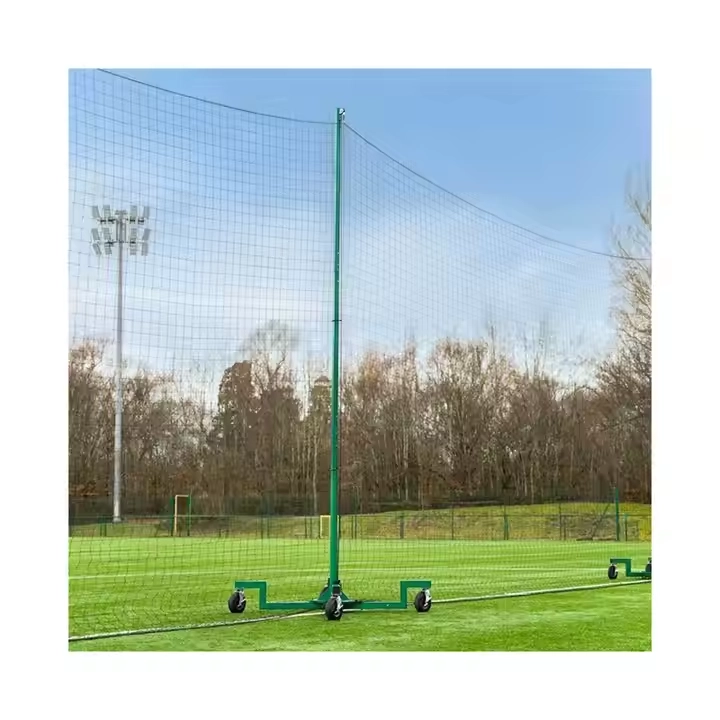
In modern golf course construction and driving range development, perimeter and putting-area fencing is no longer a secondary accessory—it is a critical engineered system that directly impacts safety, operational efficiency, and long-term cost control.
When developers, procurement managers, and facility engineers search “What is the best fence for a golf course” or compare Golf putting fence exporter price, they are not simply evaluating height or initial cost. They are assessing whether a fencing system can withstand continuous environmental exposure, repeated ball impact, and structural stress over years of operation—without driving up maintenance costs or operational risk.
This article provides a technical, decision-oriented breakdown of golf putting fence systems—from material science and structural engineering to lifecycle cost modeling—helping stakeholders identify the most effective solution for real-world golf environments.
1. Defining “Best”: Performance Criteria Beyond Height and Price
A “best” golf fence is not defined by a single parameter. It is a balance of mechanical strength, environmental resistance, system stability, and cost efficiency.
1.1 Core Performance Indicators
For professional applications, the following metrics determine fence quality:
Impact Resistance: Ability to absorb repeated ball strikes without deformation
Tension Stability: Maintenance of net shape and elasticity over time
Wind Load Resistance: Structural integrity under open-field wind pressure
Corrosion Resistance: Longevity in humid, rainy, or coastal environments
Dimensional Consistency: Uniformity across large-scale installations
Installation Efficiency: Ease of deployment and structural alignment
Failure in any one of these areas leads to increased maintenance frequency and higher total cost of ownership.
2. Material Selection: The Foundation of Fence Durability
Material choice directly determines how a golf putting fence performs under UV exposure, humidity, and repetitive impact.
2.1 Net Materials: PE vs. Polyester vs. Nylon
Different materials serve different operational priorities.
HDPE (High-Density Polyethylene)
Best for: large-area driving ranges and budget-controlled projects
Polyester (High-Strength PET)
Higher tensile strength than PE
Superior dimensional stability
Better long-term tension retention
Best for: putting greens and professional training zones where consistency matters
Nylon (Polyamide)
High elasticity and impact absorption
Strong rebound characteristics
More sensitive to UV degradation if untreated
Best for: high-frequency impact zones with proper UV coating
2.2 Knotless vs. Knotted Net Structures
The structural difference significantly affects performance:
Knotted nets: prone to stress concentration and knot slippage
Knotless nets: uniform load distribution, improved lifespan
For professional installations, knotless structures are increasingly preferred due to their consistent mechanical behavior.
2.3 Steel Wire + PVC Coated Systems
For high-security or boundary fencing:
However, these systems are:
They are typically used in perimeter protection zones, not putting areas.
3. Structural Engineering: Frame and Support System Design
Material strength alone is insufficient. Fence performance depends on how loads are distributed through the support structure.
3.1 Support Post Materials
Galvanized Steel Posts
High strength and rigidity
Excellent corrosion resistance
Suitable for tall structures (6m–15m+)
Aluminum Alloy Posts
Engineering insight:
For open golf courses with high wind exposure, galvanized steel remains the preferred choice due to its superior load-bearing capacity.
3.2 Wind Load Considerations
Golf courses are typically open environments with minimal obstruction.
Key design factors:
Fence height vs. wind pressure
Net permeability (affects airflow)
Post spacing and anchoring depth
A poorly designed system may:
3.3 Cable Tension Systems
Modern fencing systems rely on tensioned cable frameworks:
Upper and lower steel cables maintain net alignment
Adjustable tension ensures consistent surface behavior
Reduces sagging over time
Proper tension control:
4. Impact Resistance: Engineering for Repeated Ball Strikes
Unlike static fencing, golf systems must handle dynamic, repetitive impact loads.
4.1 Energy Absorption Mechanism
A well-designed fence distributes impact energy across:
Net fibers
Cable system
Support posts
This prevents localized damage.
4.2 Mesh Density vs. Performance
Typical engineering balance:
4.3 Long-Term Deformation Control
High-quality systems:
5. Case Integration: Manufacturing Capability and System Reliability
A critical but often overlooked factor when evaluating Golf putting fence exporter price is the manufacturer’s ability to deliver consistent engineering quality at scale.
A representative example is Riches Net, a manufacturer with over 23 years of experience in sports net systems.
Their capabilities include:
Complete vertical supply chain from raw wire to finished net and structural components
Fully automated processes: pipe production, cutting, punching, bending, welding, and coating
A scientific quality control system ensuring:
This integration allows:
Reduced variability between batches
Faster delivery timelines
Competitive pricing without sacrificing quality
From an engineering perspective, this is not just manufacturing—it is system-level control over performance consistency.
6. Customization for Different Golf Scenarios
No single fence design fits all applications.
6.1 Putting Green Fencing
6.2 Driving Range Fencing
6.3 Perimeter Safety Fencing
6.4 Residential Golf Installations
7. Cost Structure: Understanding Exporter Pricing
When evaluating Golf putting fence exporter price, buyers should consider the full cost breakdown.
7.1 Material Cost Drivers
Net material (PE vs. polyester vs. nylon)
Steel vs. aluminum structure
Coating and anti-corrosion treatment
7.2 Manufacturing Cost Factors
7.3 Logistics and Installation
7.4 Hidden Costs of Low-Price Systems
Low-cost solutions often lead to:
8. Total Cost of Ownership (TCO): The Real Decision Metric
Professional buyers prioritize lifecycle cost, not initial price.
8.1 Maintenance Reduction
Durable systems reduce:
Net replacement cycles
Structural repairs
Labor costs
8.2 Service Life Extension
High-quality fencing can:
Operate reliably for years
Maintain consistent performance
Resist environmental degradation
8.3 Operational Efficiency
Stable fencing systems:
Improve safety
Reduce downtime
Enhance user experience
9. Batch Consistency in Large Projects
For large-scale developments:
Key requirements:
Manufacturers with integrated production systems ensure:
10. Engineering Summary: What Defines the Best Fence
The best golf fence system is defined by:
Material durability under UV and moisture exposure
Structural integrity under wind and impact loads
Consistent tension and dimensional stability
Efficient installation and scalability
Optimized lifecycle cost
Conclusion
The question “What is the best fence for a golf course” cannot be answered with a single specification or price point. It is a systems-level decision that integrates materials engineering, structural design, manufacturing precision, and cost modeling.
Professional exporters such as Riches Net demonstrate how vertical integration and engineering-driven production can deliver fencing systems that are not only durable but also economically efficient over time.
For golf course developers, facility managers, and procurement professionals, the priority is clear:
choose fencing systems based on performance consistency and lifecycle value—not just initial cost.