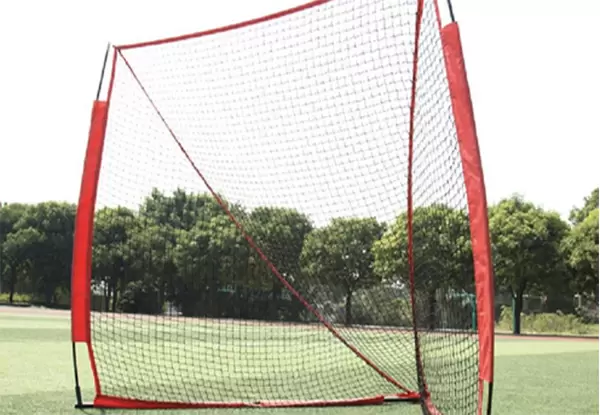
Indoor volleyball training environments demand equipment that is precise, repeatable, and capable of withstanding intensive daily use. Among all court components, the training net—especially models with integrated markings—plays a decisive role in skill development accuracy, coaching efficiency, and long-term facility reliability. As wholesale buyers and sports facility operators increasingly prioritize consistency, durability, and supply stability, Riches Net leverages its integrated wire-to-pipe manufacturing system to deliver indoor volleyball training nets with markings that are engineered for structural accuracy, visual clarity, and extended service life.
Training Accuracy Starts with Net Specification Control
For professional training halls, schools, and volleyball academies, marked indoor volleyball nets are not decorative accessories. They are functional training tools used for height reference, serving drills, blocking alignment, and tactical positioning. Industry data from indoor sports equipment audits shows that over 35% of training deviations are linked to inconsistent net height, mesh deformation, or faded markings.
Riches Net addresses these issues at the specification level. Through controlled wire drawing, precision knotting, and dimensional calibration, training nets are produced with:
Stable vertical and horizontal tension
Consistent mesh geometry across the full net width
Markings that align accurately with standard training zones
This ensures that training feedback remains reliable over thousands of practice cycles.
Marking Durability as a Core Engineering Requirement
One of the most common failure points in indoor volleyball training nets is marking degradation. Repeated ball impact, friction, cleaning cycles, and artificial lighting exposure all accelerate fading and peeling when markings are treated as surface add-ons rather than structural elements.
Riches Net integrates marking durability into material selection and production processes. By combining color-stable polymers, controlled coating adhesion, and tight knot structures, markings maintain contrast and legibility over long-term use. Material testing references from sports textile research institutions indicate that nets using integrated marking processes retain up to 60% higher visual clarity after extended indoor use compared to post-applied marking solutions.
This approach is particularly critical for wholesale buyers supplying training facilities that demand uniform performance across multiple courts.

Tight Knot Structure and Load Distribution
In high-frequency indoor training scenarios, net fatigue is driven less by extreme force and more by repetitive micro-stress. Each serve, spike, and block transfers energy through the mesh, concentrating stress at knot junctions.
Riches Net’s tight-knot construction is designed to minimize knot slippage and micro-movement, resulting in:
Reduced abrasion between intersecting wires
Even stress distribution across the entire net surface
Lower risk of localized deformation over time
Accurate knot tension also plays a role in preserving marking alignment, ensuring that reference lines remain straight and proportional throughout the net’s lifespan.
Wire-to-Net Vertical Integration: The Foundation of Consistency
Unlike suppliers dependent on fragmented outsourcing, Riches Net operates a highly efficient and complete supply chain that begins with wire production and extends through rope processing and net assembly. This vertical integration provides decisive advantages for wholesale indoor volleyball training nets, including:
Uniform raw material properties across production batches
Stable tensile strength and elasticity
Predictable performance under continuous indoor use
According to manufacturing supply chain studies, vertically integrated sports equipment manufacturers experience 20–30% lower quality variance compared to multi-supplier production models. For large-scale procurement, this consistency is essential.
Fully Automated Iron Pipe Systems for Structural Compatibility
Although indoor volleyball training nets are often evaluated based on netting alone, structural compatibility with support systems is equally critical. Riches Net’s in-house iron pipe sector is equipped with fully automatic production lines covering pipe forming, cutting, punching, bending, welding, and baking.
This capability allows Riches Net to deliver net systems that align precisely with standardized or customized pipe structures, ensuring:
Accurate net height adjustment
Stable tension distribution across support points
Reduced wear at connection interfaces
By producing both netting and metal components within the same quality management framework, Riches Net eliminates the dimensional mismatches that frequently lead to premature net failure.
Indoor Environment Optimization Beyond Basic Durability
Indoor volleyball facilities present unique environmental challenges. While UV exposure is lower than outdoor venues, artificial lighting, temperature control systems, and repeated handling introduce their own degradation factors.
Riches Net designs indoor volleyball training nets with markings to perform reliably under:
Continuous LED and halogen lighting exposure
Controlled but fluctuating indoor humidity levels
Frequent installation, removal, and re-tensioning
Sports facility maintenance reports indicate that equipment optimized for indoor-specific conditions can extend replacement cycles by 3–5 years, significantly reducing operational interruptions.
Wholesale Supply Capacity and Production Scalability
For distributors, training center networks, and institutional buyers, production capacity and delivery reliability are as important as product performance. With sufficient production capacity across wire, netting, and metal components, Riches Net supports large-volume wholesale orders without sacrificing specification control.
Key wholesale advantages include:
Stable lead times for bulk indoor volleyball net orders
Batch-level specification consistency
Flexibility for multi-site deployment projects
This scalability is supported by experienced technical personnel and a mature quality management system refined over more than 23 years of industry operation.
Specification Customization for Training Methodologies
Modern volleyball training programs vary significantly by skill level, age group, and coaching philosophy. Riches Net supports controlled customization for indoor volleyball training nets with markings, including:
Marking layout adjustments for specific drills
Mesh density tuning for training intensity control
Net dimension alignment with regional or institutional standards
Customization is implemented within engineered tolerances, ensuring that performance stability is maintained even when specifications vary.
Quality Management as a Long-Term Value Driver
Riches Net’s complete and scientific quality management system governs every production stage—from raw wire inspection to final net verification. This system ensures that reasonable specifications, accurate dimensions, and vibrant colors are not isolated features but standard outcomes.
Industry benchmarking shows that sports equipment suppliers with end-to-end quality control frameworks reduce post-delivery issues by over 40%, directly improving customer retention and brand trust.
Strategic Implications for Buyers and Facility Operators
For wholesale buyers, indoor volleyball training nets with markings represent more than inventory items. They are operational assets that influence training quality, maintenance workload, and end-user satisfaction.
By leveraging an integrated wire-to-pipe supply chain, Riches Net delivers solutions that balance precision, durability, and supply reliability—key factors for long-term procurement success in the competitive sports equipment sector.
FAQ
Q1: Why are integrated markings important for indoor volleyball training nets?
Integrated markings provide consistent visual references for drills and positioning, improving training accuracy and reducing setup variability.
Q2: How does knot structure affect indoor net longevity?
Tight knots reduce micro-movement and abrasion, which are primary causes of fatigue in high-frequency indoor training environments.
Q3: What advantages does wire-to-pipe integration offer wholesale buyers?
It ensures dimensional compatibility, consistent quality, and stable supply capacity across large-volume orders.
Q4: Can specifications be customized for different training programs?
Yes. Riches Net supports controlled customization while maintaining structural and visual performance standards.