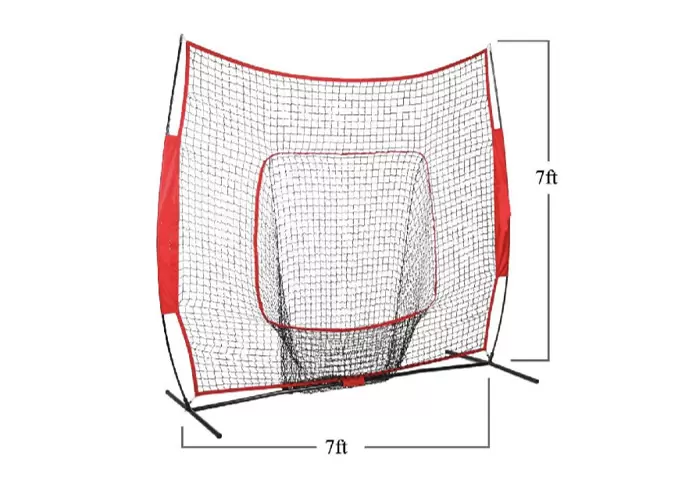
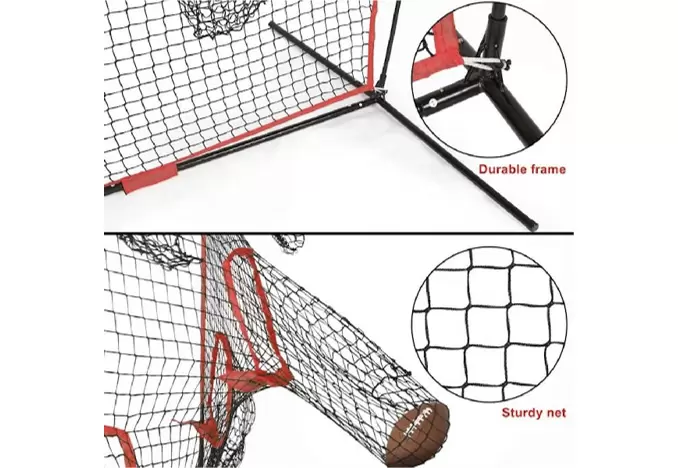
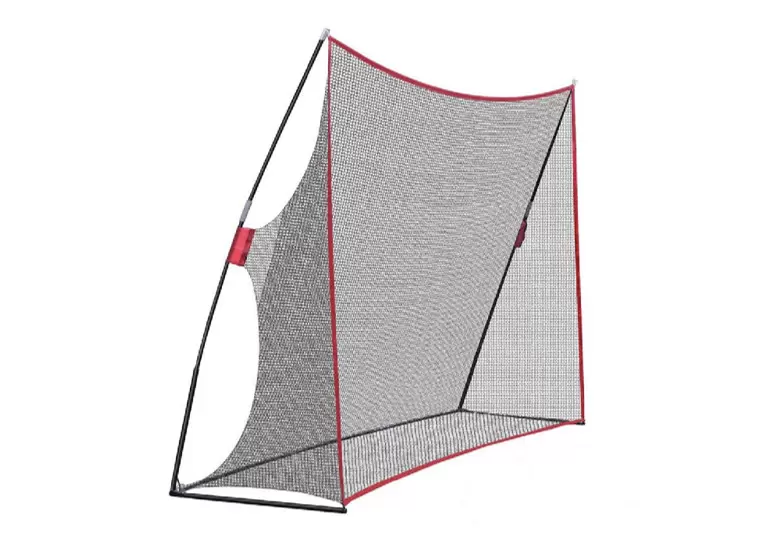
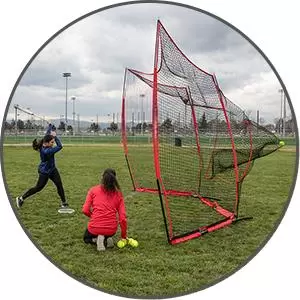
In baseball field safety engineering, baseball backstop netting installation is not simply a perimeter containment task. It is a structural protection system designed to manage high-velocity impact energy, define controlled ball trajectories, and ensure spectator-zone safety under repeated dynamic loading conditions.
At the same time, baseball backstop netting cost is not determined solely by material price per square meter. It is fundamentally driven by engineering parameters such as structural height, anchoring depth, wind load rating, steel frame specification, and long-term maintenance load over the system lifecycle.
For procurement engineers, stadium planners, and construction contractors, understanding the relationship between installation design and cost structure is essential for building a system that remains stable under professional-level play conditions over extended service cycles.
Baseball Backstop Netting as a High-Energy Impact Control System
A baseball backstop netting system functions as a distributed kinetic energy absorption structure. Unlike simple fencing or visual barriers, it must manage:
High-velocity baseball impact energy ranging from training-level throws to professional pitch speeds
Repeated cyclical loading at concentrated impact zones behind home plate
Lateral wind forces acting on large surface-area netting structures
Structural vibration transfer between net, cables, and steel support frame
If the system is not engineered correctly, failure modes typically include:
Localized net deformation due to uneven tension distribution
Progressive anchor loosening under cyclic load fatigue
Steel frame oscillation caused by insufficient lateral bracing
Mesh fatigue rupture at high-impact concentration points
Structural Composition of Professional Backstop Netting Systems
A high-performance baseball backstop system is composed of four integrated engineering layers:
1. Netting Layer (Impact Absorption Medium)
Riches Net, with over 23 years of manufacturing expertise in sports net systems since 2000, produces high-strength polyester-based and polyethylene hybrid mesh systems designed for:
High tensile load distribution under repeated baseball impact
UV-resistant fiber stabilization for prolonged outdoor exposure
Multi-strand braided structures that reduce single-point stress concentration
Controlled mesh elasticity to prevent rebound acceleration of impact energy
The 3-strand 1.25” strike-resistant configuration used in flagship systems ensures that impact forces are distributed across multiple fiber intersections rather than isolated break points.
2. Structural Frame System
The frame defines the geometric stability of the entire backstop system.
In engineered installations, two key structural materials are commonly used:
Galvanized steel support columns, which provide high compressive strength and long-term resistance to bending deformation under sustained tension load
Fiberglass reinforcement rods, which introduce controlled flexibility while maintaining axial stability under dynamic wind and impact conditions
The combination of rigid steel anchoring and flexible composite support allows the structure to absorb dynamic loads without transferring excessive stress to the netting surface.
3. Tension Cable System
The steel cable tension network is responsible for maintaining geometric integrity across large-span installations.
A properly designed system ensures:
Even distribution of tensile load across vertical and horizontal axes
Reduced stress concentration at corner and anchor points
Controlled deformation response under wind load and ball impact cycles
Prevention of progressive sagging in long-span installations
Without controlled tension engineering, net systems tend to develop mid-span displacement and structural misalignment over time.
4. Ground Anchoring and Foundation System
The foundation system directly determines long-term structural stability.
Key design elements include:
Embedded concrete footings designed for lateral load resistance under repeated impact vibration
Anti-rotation anchoring systems that prevent column torsion under asymmetric load conditions
Corrosion-protected base plates that maintain structural integrity in high-humidity or rain-exposed environments
Three-Dimensional Tension Balance System (Core Engineering Innovation)
One of the most critical advancements in modern baseball backstop engineering is the three-dimensional tension equilibrium distribution system.
This system ensures:
Vertical load distribution is balanced across full net height, preventing bottom-edge overstress during repeated impact cycles
Horizontal tension alignment remains stable even under uneven wind loading conditions across large field installations
Diagonal force vectors are absorbed gradually rather than transmitted directly into rigid structural points
This engineering approach significantly reduces:
Localized fiber fatigue accumulation
Structural vibration amplification at anchor points
Net deformation under repeated high-speed ball impact
Anti-Impact Energy Dissipation Structure
The system is also engineered as a kinetic energy dissipation network, not just a physical barrier.
When a baseball impacts the net:
Initial kinetic energy is absorbed by outer mesh deformation
Load is transferred across multiple fiber intersections
Structural tension cables redistribute residual force into the frame system
Ground anchoring absorbs final residual energy dispersion
This staged energy transfer prevents sudden stress concentration, which is the primary cause of net tearing and structural fatigue in low-grade systems.
Baseball Backstop Netting Installation Engineering Process
Professional baseball backstop netting installation follows a structured engineering workflow rather than simple assembly.
Step 1: Site Load and Geometry Analysis
Engineers evaluate:
Field dimensions behind home plate
Expected ball velocity range based on usage level (school, amateur, or professional)
Wind load classification based on geographic location
Soil bearing capacity for foundation design
Step 2: Foundation and Anchor Construction
Concrete base structures are installed with precise depth and spacing calculations to ensure:
Vertical load stability under tension force distribution
Resistance to lateral displacement during wind events
Long-term structural anchoring under cyclic vibration
Step 3: Steel Frame Erection
Galvanized steel columns are installed with strict vertical alignment tolerance control, ensuring:
Minimal angular deviation under full tension load
Proper alignment for cable distribution geometry
Load symmetry across full backstop width
Step 4: Cable Tensioning System Installation
Steel cables are installed and tensioned incrementally to ensure:
Uniform force distribution across net surface
Controlled structural pre-load before mesh installation
Elimination of localized stress peaks during final net mounting
Step 5: Net Integration and Final Calibration
The netting system is installed and adjusted to:
Achieve uniform vertical tension across entire surface
Maintain consistent rebound absorption characteristics
Ensure compliance with field safety clearance standards
Application Scenarios of Baseball Backstop Netting Systems
Professional Baseball Stadiums
Require high structural redundancy and strict compliance with impact safety standards due to high ball velocity and spectator proximity.
School and Training Fields
Require balanced durability and maintenance stability under frequent repetitive use conditions and varying skill levels.
Community Sports Facilities
Require systems capable of handling irregular usage patterns and mixed-impact intensity levels without structural degradation.
Sports Academies
Require consistent energy absorption behavior to support repeated pitching and batting drills with predictable rebound characteristics.
Baseball Backstop Netting Cost Structure Analysis
The baseball backstop netting cost is determined by a combination of structural engineering and lifecycle performance factors rather than material cost alone.
1. Net Height and Coverage Area
Larger vertical coverage increases wind load exposure
Greater surface area requires reinforced tension distribution systems
Taller structures demand deeper foundation anchoring systems
2. Steel Structure Specification
Column diameter and wall thickness directly affect load-bearing capacity
Galvanization level influences long-term corrosion resistance
Structural reinforcement design affects installation complexity and material usage
3. Foundation Engineering Complexity
Soil reinforcement requirements vary by field geography
Deeper anchoring increases concrete volume and labor intensity
High-wind regions require reinforced base geometry
4. Installation Labor Engineering
Precision alignment of tension systems requires controlled sequencing
Cable balancing and net calibration affect total installation duration
Large-scale stadium projects require staged structural validation
5. Custom Engineering Requirements
Non-standard field geometries increase design complexity
Higher impact rating requirements require reinforced mesh systems
Special spectator proximity configurations require additional safety layers
6. Lifecycle Maintenance Cost
Net replacement cycles depend on UV exposure intensity
Steel corrosion resistance determines long-term structural maintenance frequency
Tension system recalibration requirements affect operational upkeep cost
Riches Net Engineering Capability
Riches Net, established in 2000 with over two decades of expertise in sports net manufacturing, integrates a fully controlled production and engineering system:
Automated wire and pipe processing systems including cutting, punching, bending, welding, and surface coating
Full-chain material control from fiber production to metal structural components
Scientific quality assurance systems ensuring dimensional accuracy, tensile consistency, and structural reliability
Custom engineering capability for mesh density, rope thickness, and structural configuration adjustments
This integrated manufacturing system ensures that every backstop installation behaves as a unified engineering structure rather than independent components.
Conclusion
A baseball backstop netting system is a high-energy structural safety system, where installation engineering and cost structure are deeply interconnected through load mechanics, material behavior, and long-term field performance requirements.
Effective baseball backstop netting installation requires precise control over foundation design, tension distribution, and structural alignment, while baseball backstop netting cost must be evaluated through lifecycle engineering parameters rather than surface-level material pricing.
Riches Net delivers engineered backstop systems designed for controlled impact absorption, structural stability, and long-term outdoor durability across professional, educational, and recreational baseball environments.