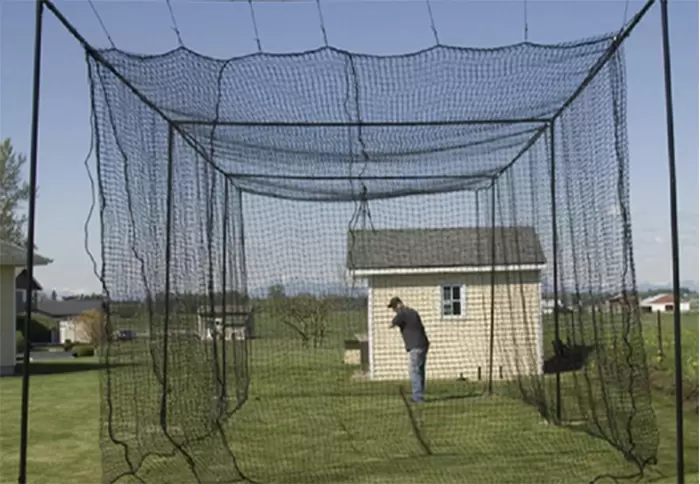
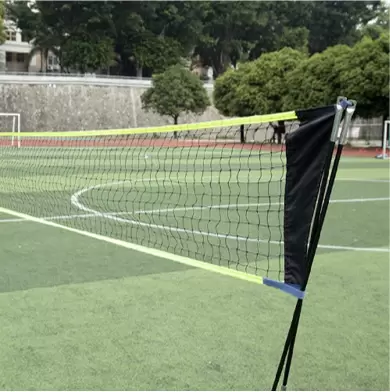
In professional rugby training environments, equipment performance is no longer evaluated through simple durability claims. For elite clubs, youth development academies, school sports departments, and outdoor training infrastructure contractors, the Best rugby training net manufacturer is defined by one critical factor: system stability under repeated high-impact load conditions over long-term outdoor deployment.
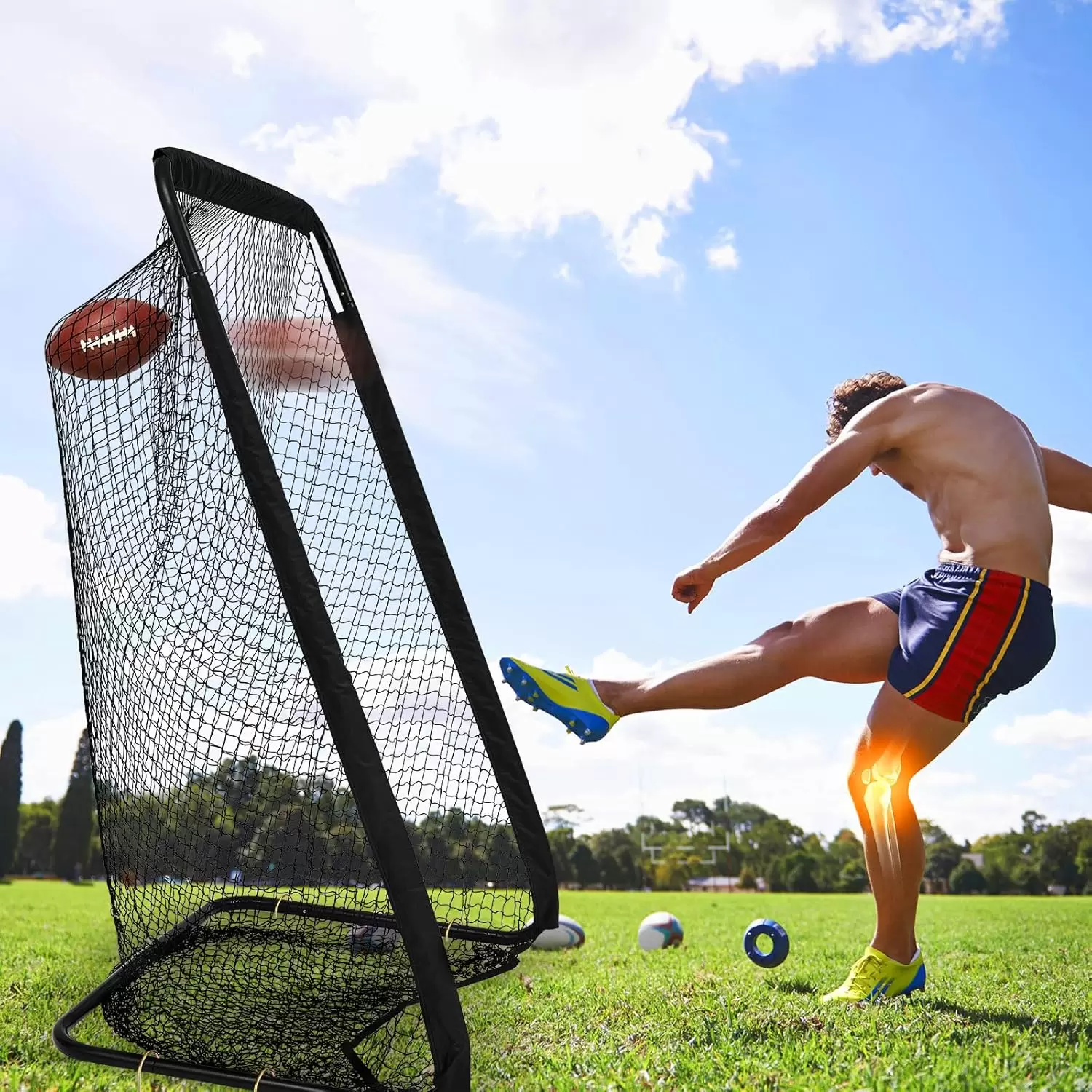
In real training scenarios, rugby balls are not simply “caught” by a net. They are delivered under varying velocities, spin conditions, and angle trajectories. This creates a complex mechanical stress environment where the training net must consistently absorb impact energy, maintain structural integrity, and return predictable ball rebound behavior without progressive deformation.
Therefore, the question is not whether a rugby training net works—it is whether it performs consistently under professional-level repetition, environmental exposure, and structural stress accumulation.
Rugby Training Net as a Controlled Impact Absorption System
From an engineering perspective, a rugby training net is a dynamic energy distribution structure. Each impact event generates localized tensile stress that must be redistributed across the entire net surface to prevent failure points.
Unlike casual sports nets, professional rugby training systems must handle:
high-velocity kick impacts
repetitive passing drills with minimal recovery time
angle-variant projectile trajectories
continuous multi-athlete usage cycles
This creates a requirement for uniform load dispersion and controlled elasticity behavior, not just raw material strength.
High-Density HDPE Structural Engineering for Impact Resistance
The flagship rugby training net system is built using high-density polyethylene (HDPE) UV-resistant braided structure, engineered specifically for outdoor professional training environments.
Core material engineering advantages:
1. UV-Stabilized Molecular Structure
HDPE fibers are treated with UV-resistant additives to slow polymer degradation under prolonged sunlight exposure.
2. High Tensile Load Distribution Capacity
The braided structure distributes impact force across multiple fiber paths, reducing localized stress concentration.
3. Elastic Recovery Behavior
After repeated ball impact, the net returns to its original tension state without permanent deformation.
4. Moisture and Weather Resistance
HDPE maintains structural stability in:
This is critical for outdoor rugby training facilities operating year-round.
Industrial Frame System: Structural Stability Under Repetitive Impact
A rugby training net cannot be evaluated independently from its structural frame system. The frame defines how impact forces are anchored and redistributed.
The system integrates:
reinforced industrial-grade frame structure
precision steel pipe manufacturing process
cutting, punching, bending, and welding integration
high-temperature baking coating finish
Engineering outcomes include:
1. Anti-Deformation Load Resistance
Frame structure maintains geometry under repeated high-force ball impacts.
2. Corrosion-Resistant Surface Protection
Baked coating layer improves outdoor lifespan under rain and humidity exposure.
3. Structural Vibration Control
Reduces oscillation after high-speed ball impact, improving training feedback consistency.
Dynamic Tension Balancing System: Core Engineering Innovation
One of the most critical innovations in modern rugby training net design is the Dynamic Tension Balancing System.
This system directly addresses the most common failure mode in training nets: uneven tension distribution leading to localized wear and performance degradation.
Why Dynamic Tension Balancing System Matters
In traditional nets, repeated impacts create:
localized stress concentration zones
uneven stretching across net segments
accelerated fiber fatigue in high-impact regions
inconsistent ball rebound behavior
These issues directly reduce training quality and increase replacement frequency.
How Dynamic Tension Balancing System Works
1. Multi-Point Tension Distribution Architecture
Instead of relying on edge-only tensioning, the system distributes load across multiple anchoring points.
2. Real-Time Load Redistribution Behavior
Each impact triggers redistribution of mechanical force across adjacent net segments.
3. Stress Equalization Across Mesh Structure
Prevents formation of high-stress “hot zones” that typically lead to early failure.
4. Impact Energy Absorption Optimization
High-speed ball impacts are gradually decelerated across multiple tension layers rather than a single resistance point.
Engineering Advantages in Professional Training Environments
1. Improved Training Efficiency for Athletes
Consistent rebound behavior allows players to:
2. Reduced Equipment Replacement Frequency
Because stress is evenly distributed, the net avoids early localized failure, significantly extending service life in high-frequency training environments.
3. Stable Performance in Multi-Athlete Training Sessions
In professional clubs and academies, multiple players often use the same training net simultaneously.
The system ensures:
consistent ball return behavior
no structural distortion under uneven usage patterns
stable performance under continuous impact cycles
Rugby Training Net 7x7FT Configuration: Optimized Training Geometry
The standard configuration includes:
Engineering significance of this configuration:
1. 7x7FT Training Envelope Optimization
Provides sufficient interception area for:
professional kicking drills
passing accuracy training
reaction-based catching exercises
2. 7-Ply Polyester Net Structure
Enhances:
3. 1.75” Mesh Geometry
Optimized for:
controlled ball deceleration
consistent rebound behavior
reduced ball escape probability
4. 420D Oxford Fabric Reinforcement
Strengthens perimeter zones under high tension stress.
Real Training Scenarios: Engineering Performance in Action
1. Professional Rugby Club Training Bases
High-intensity drills require:
repeated high-speed kicks
minimal downtime between sessions
consistent rebound feedback for skill refinement
The system ensures stable performance under continuous elite-level usage.
2. Youth Sports Training Institutions
For developing athletes, equipment consistency is critical for:
The balanced tension system ensures predictable ball behavior for learning consistency.
3. School Sports Departments
School environments require:
The system reduces maintenance requirements and improves safety reliability.
4. Outdoor Training Facility Contractors
Outdoor installations demand:
HDPE + reinforced frame system ensures year-round usability.
Long-Term Outdoor Durability and Anti-Aging Performance
Outdoor rugby training equipment is exposed to:
The HDPE-based system ensures:
reduced fiber brittleness over time
stable elasticity retention
minimized color and structural degradation
consistent performance across seasons
This is essential for long-term facility investment planning.
Manufacturing Capability Behind Riches Net
Huizhou Riches Net Science & Technology Co., Ltd., established in 2000, brings more than 23 years of industrial expertise in sports net manufacturing.
The company operates a fully integrated production system covering:
wire production
rope-to-net conversion
metal pipe fabrication
automated cutting, bending, punching, and welding systems
baking finish surface treatment
This integrated supply chain ensures:
consistent dimensional accuracy
tight knot structure integrity
precise manufacturing tolerances
scalable production capacity for global demand
The company’s products are known for:
Customization Capability for Professional Sports Systems
To support different training environments, the system offers:
This allows procurement teams to align equipment with:
Conclusion: Rugby Training Net as a High-Precision Impact Engineering System
The modern definition of the Best rugby training net manufacturer is no longer based on basic durability or cost efficiency. It is defined by how effectively the system manages impact energy distribution, structural tension balance, and long-term performance consistency under professional training conditions.
Through HDPE UV-resistant braided structure, industrial-grade frame engineering, and the Dynamic Tension Balancing System, modern rugby training nets achieve:
stable high-impact resistance
consistent ball rebound behavior
reduced localized wear failure
long-term outdoor reliability
For professional rugby clubs, training academies, and sports infrastructure contractors, this translates directly into:
improved training efficiency
lower lifecycle replacement costs
higher athlete development consistency
more reliable facility operation
In high-performance sports environments, the training net is not a passive accessory—it is a controlled mechanical system that directly influences training quality and athlete development outcomes.