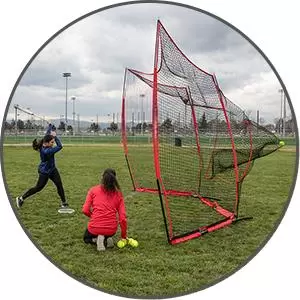
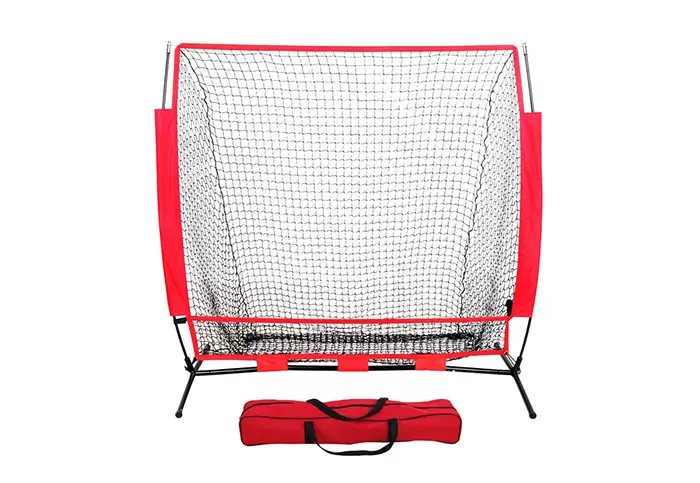
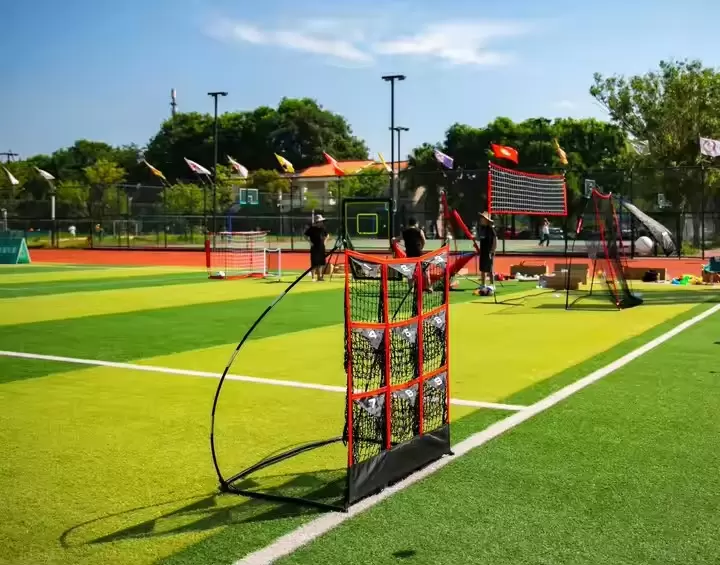
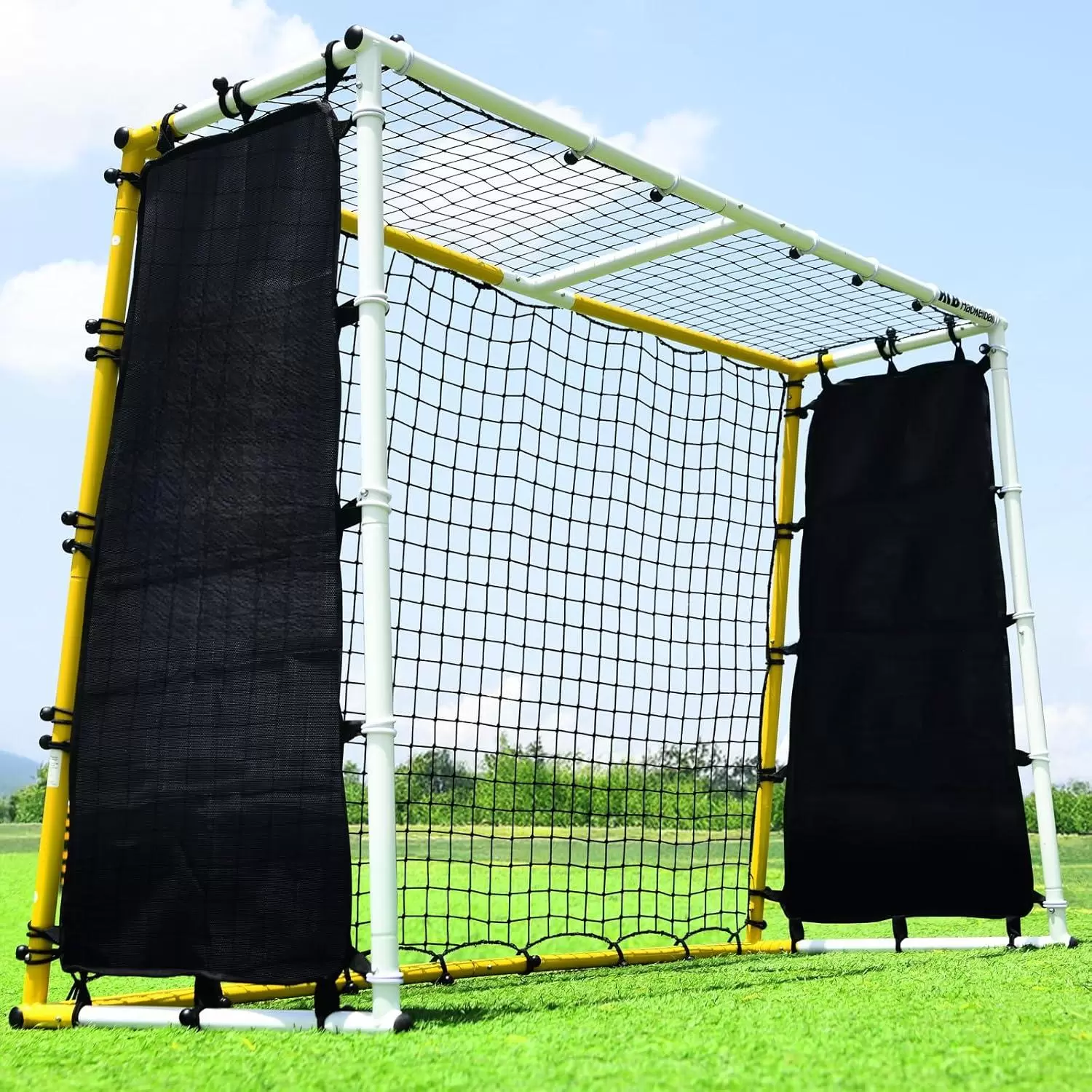
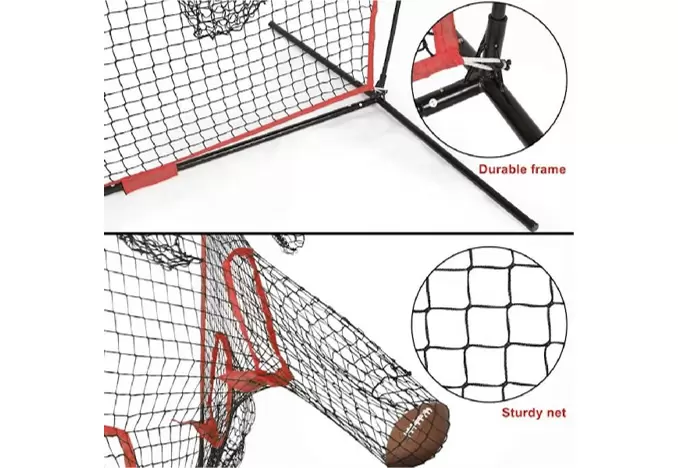
In modern youth sports infrastructure, the procurement of badminton training equipment is no longer driven by simple cost or basic usability considerations. For children’s sports training institutions, school physical education departments, youth clubs, outdoor sports equipment distributors, and wholesale buyers, the evaluation of a Children’s badminton net factory China price is fundamentally tied to system-level performance factors.
These include:
structural safety under repeated child interaction
stability during frequent installation and removal cycles
consistent tension behavior across multiple usage sessions
resistance to deformation under light but repetitive impact
long-term durability in high-frequency school environments
Similarly, when evaluating the Best children's badminton net factory China, decision-makers are not simply comparing products—they are assessing whether the entire training system can maintain predictable safety behavior and mechanical consistency under real educational conditions.
Children’s Badminton Net as a Controlled Safety Training System
A children’s badminton net is not a scaled-down version of an adult sports net. From an engineering standpoint, it is a low-impact interaction system designed specifically for safety, predictability, and repeatable training conditions.
Unlike professional competitive nets, children’s training systems must prioritize:
reduced collision injury risk
stable low-force rebound behavior
simplified structural setup
resistance to misuse or irregular handling
predictable deformation limits under accidental force
This shifts the design logic from performance maximization to controlled safety engineering.
PE Lightweight High-Strength Netting: Structural Foundation for Safe Training
The core of the system is constructed using lightweight high-strength polyethylene (PE) woven netting, optimized specifically for children’s training environments.
Engineering properties include:
1. Low-Mass Impact Behavior
PE fibers reduce kinetic energy rebound intensity, minimizing the risk of injury during accidental collisions.
2. High Elastic Recovery Stability
After deformation caused by light ball impacts, the net returns to its original tension state without structural instability.
3. Moisture and Outdoor Resistance
The material maintains performance consistency in:
4. Controlled Flexural Response
Unlike rigid synthetic nets, PE provides a safer deformation curve when exposed to irregular force.
Structural Frame Engineering: Safety-Oriented Design Architecture
The supporting structure system is engineered using lightweight iron pipe technology integrated with industrial manufacturing processes including:
Engineering outcomes:
1. Stability Under Frequent Assembly Cycles
Designed for school environments where equipment is frequently:
2. Anti-Tipping Structural Design
Low center-of-gravity geometry reduces accidental collapse risk during active play.
3. Coating Protection System
Baked surface treatment enhances durability against scratches, moisture, and corrosion.
Safety Buffer Tension Dispersion System: Core Engineering Innovation
One of the most critical differentiators in modern Best children's badminton net factory China systems is the Safety Buffer Tension Dispersion System.
This system is specifically engineered to solve a key problem in children’s sports environments:
localized tension concentration leading to instability and increased injury risk.
Why Safety Buffer Tension Dispersion System Matters
In conventional low-cost training nets, repeated use often leads to:
uneven tension distribution across mesh areas
localized overstretching at connection points
inconsistent ball rebound behavior
increased risk of structural imbalance during accidental contact
In children’s environments, these issues become safety-critical rather than purely mechanical concerns.
How the System Works
1. Distributed Load Absorption Architecture
Instead of concentrating force at edge points, the system spreads tension across multiple buffer zones.
2. Controlled Elastic Dampening Layer
Reduces sudden force transmission when the ball or body impacts the net.
3. Multi-Point Stress Equalization
Prevents localized overstress in frequently impacted regions.
4. Low-Impact Response Calibration
Ensures that ball rebound remains soft, predictable, and suitable for beginner training.
Engineering Benefits in Real Educational Environments
1. Improved Student Safety in Physical Education Classes
The system significantly reduces injury risk by:
absorbing accidental body contact force
reducing rebound speed of lightweight shuttle impacts
preventing sudden structural movement
2. Enhanced Teaching Efficiency for Coaches
Stable net behavior allows instructors to:
maintain consistent training rhythm
reduce interruptions caused by equipment instability
focus on skill instruction rather than equipment adjustment
3. Reduced Equipment Damage in Multi-Class Rotation Systems
In schools where equipment is shared across multiple classes daily, the system ensures:
consistent structural integrity over repeated use cycles
reduced deformation accumulation
longer replacement intervals
Product Engineering Specifications: Optimized for School and Youth Training
The system is designed with standardized configurations:
Size Options: 10 / 14 / 17 × 3–5FT
Net Material: high-strength polyester netting (PE-based system integration)
Reinforcement Fabric: 420D Oxford fabric
Customization: size, color, material, packaging
Engineering interpretation of these parameters:
1. Multi-Size Adaptability
Supports different training environments:
2. Polyester Netting Structural Consistency
Ensures uniform mesh geometry for predictable shuttle behavior.
3. 420D Oxford Fabric Reinforcement
Strengthens perimeter zones subjected to frequent tension stress during installation and removal.
Real-World Application Scenarios
1. School Physical Education Systems
In school environments, key requirements include:
fast setup between classes
safe interaction for beginners
low maintenance complexity
The system supports rapid deployment and stable performance across multiple daily cycles.
2. Youth Sports Training Institutions
For structured coaching environments, the net provides:
consistent shuttle trajectory feedback
safe learning conditions for beginners
predictable rebound behavior for skill development
3. Outdoor Temporary Training Fields
For community or seasonal sports programs, the system ensures:
resistance to wind-induced instability
stable tension under variable terrain setups
quick assembly and dismantling capability
4. Sports Equipment Distributors and Wholesale Buyers
For commercial procurement, key concerns include:
unit cost stability (Children’s badminton net factory China price)
production consistency across batches
packaging efficiency for logistics optimization
customization scalability for different markets
Long-Term Structural Stability and Usage Consistency
One of the most critical factors in evaluating Children’s badminton net factory China price is lifecycle performance.
The system is engineered to minimize:
mesh deformation over time
structural loosening at connection points
uneven wear caused by repetitive installation
performance degradation in outdoor environments
This ensures predictable long-term operational cost planning for institutions.
Manufacturing Capability Behind Riches Net
Huizhou Riches Net Science & Technology Co., Ltd., established in 2000, brings over 23 years of industrial manufacturing experience in sports net systems.
Its production infrastructure includes:
full wire-to-net supply chain integration
automated iron pipe manufacturing systems
precision cutting, punching, bending, welding processes
high-temperature baking surface finishing
scientific quality management system
This allows the company to deliver:
consistent dimensional accuracy
tight structural knot integrity
vibrant and stable product appearance
long service life under repetitive use conditions
Cost Engineering Perspective: Understanding Children’s Badminton Net Factory China Price
Unlike simple commodity pricing, the Children’s badminton net factory China price reflects multiple engineering factors:
material grade selection (PE vs standard polyester)
structural reinforcement complexity
frame manufacturing automation level
coating durability system
quality control consistency across batches
customization requirements for different markets
A lower price often reflects reduced structural safety margins, which directly impacts long-term replacement cost in school environments.
Conclusion: Safety-Driven Engineering Defines the Best Children's Badminton Net Factory China
The true definition of the Best children's badminton net factory China is not based on minimal cost or basic functionality. It is defined by how effectively the system balances:
child safety protection
structural stability under repetitive use
consistent training performance
rapid deployment efficiency
long-term durability in institutional environments
Through PE lightweight high-strength netting, reinforced structural frames, and the Safety Buffer Tension Dispersion System, modern children’s badminton nets evolve into engineered safety training systems rather than simple sports accessories.
For schools, training institutions, and procurement organizations, this translates into:
safer learning environments
lower maintenance workload
improved teaching efficiency
predictable long-term procurement planning
In modern youth sports infrastructure, equipment is not just a tool—it is a controlled safety system that directly affects learning quality and operational reliability.