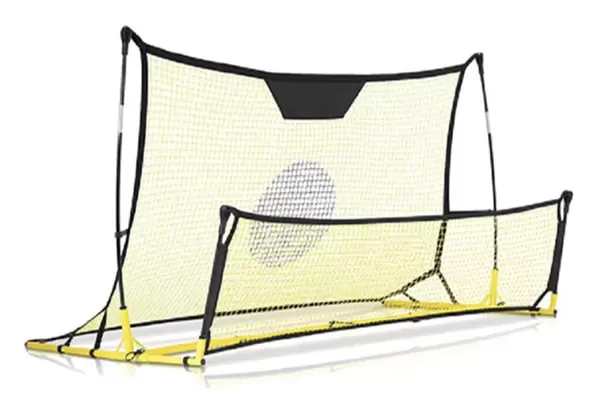
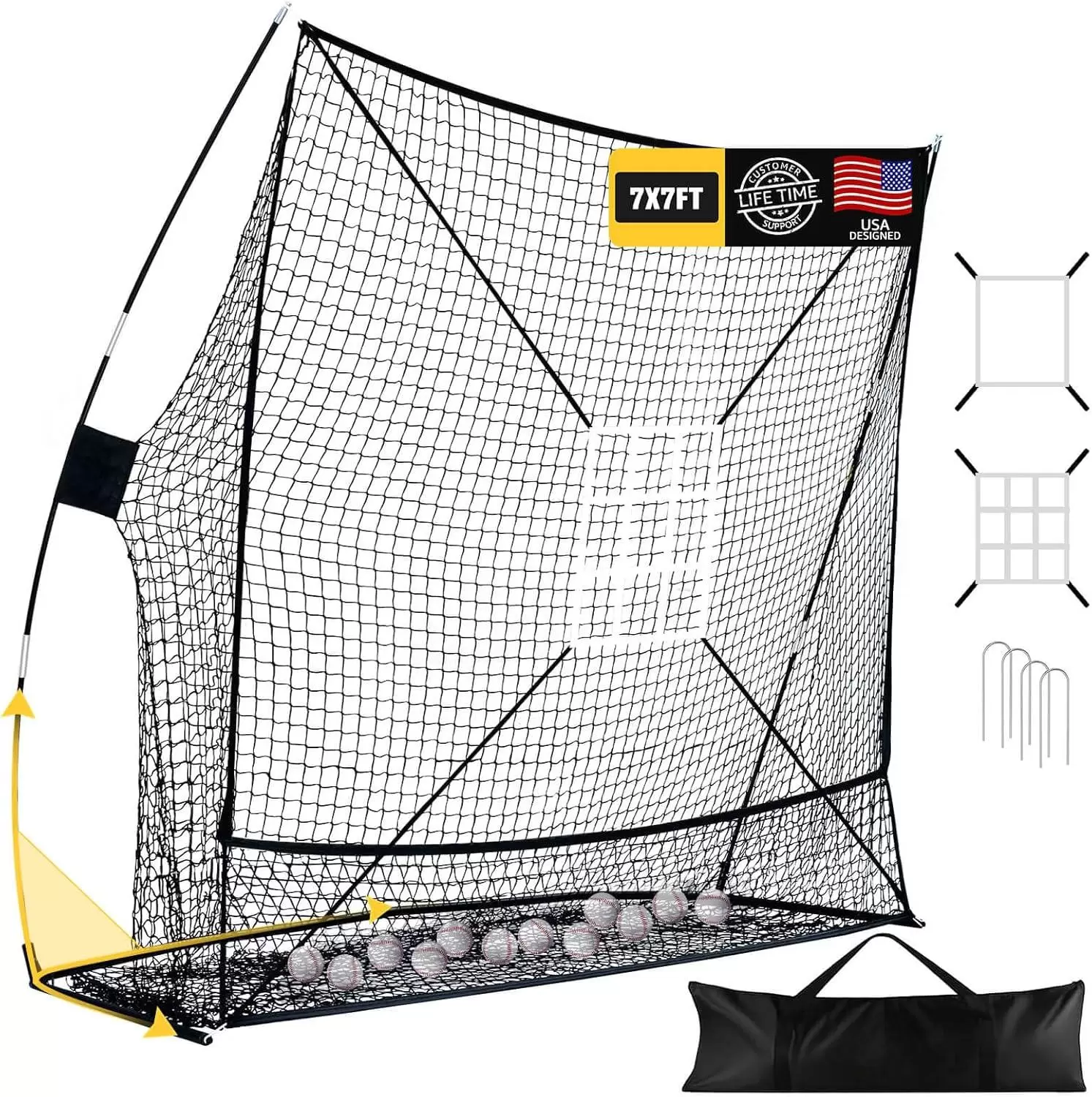
Redefining Soccer Training Through Controlled Rebound Physics
Modern soccer training is no longer defined by repetitive drills alone, but by how precisely a training system can replicate real match ball behavior under controlled mechanical conditions. A professional soccer rebounder system is not simply a net attached to a frame—it is a calibrated kinetic response device designed to reproduce passing angles, shot deflection behavior, and first-touch reaction timing.
For training environments ranging from youth academies to professional development programs, the expectations have shifted toward:
Consistent ball return angle across repeated impact cycles
Stable energy absorption without unpredictable deflection drift
Controlled rebound velocity aligned with training intensity levels
Structural integrity under continuous outdoor exposure and high-frequency use
At Riches Net (Huizhou Riches Net Science & Technology Co., Ltd., established in 2000), our engineering approach treats soccer rebounders as dynamic motion feedback systems, where every structural component contributes to controlled ball trajectory behavior rather than passive impact absorption.
System Architecture of a Professional Soccer Goal Rebounder
A high-performance Soccer Goal Rebounder is built on a layered mechanical response system rather than a single elastic surface. Our design integrates three core functional modules:
1. High-Tension Impact Capture Net Layer
The first layer is responsible for initial energy interception and directional stabilization.
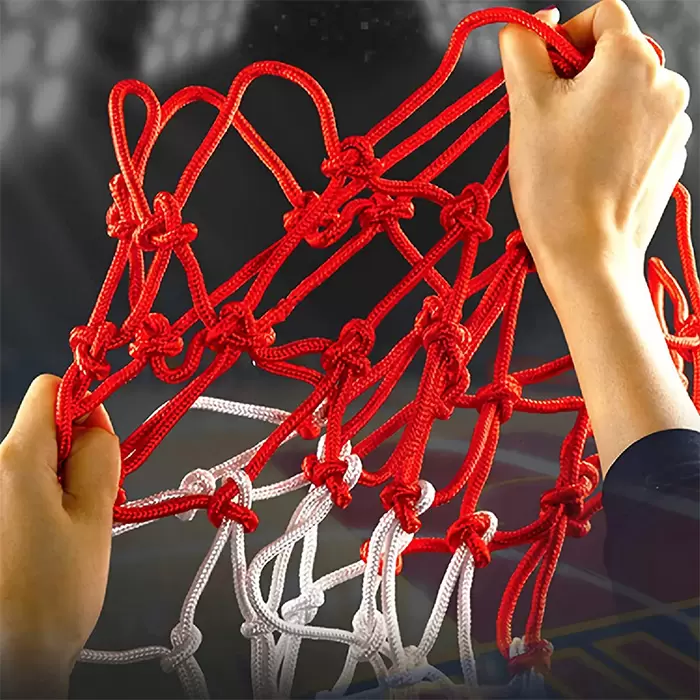
Constructed using 5-ply 4-inch industrial-grade black polyester netting
Designed to maintain consistent elastic modulus under repeated ball strikes
Knot geometry engineered to prevent localized stress accumulation and mesh distortion
Controlled fiber stretch ratio ensures predictable rebound behavior across multiple impact intensities
Unlike conventional nets that deform unpredictably under repeated use, this structure maintains a stable energy response curve even under continuous training loads.
The key engineering objective here is not maximum elasticity, but repeatable elastic consistency, which directly affects passing accuracy training outcomes.
2. Multi-Angle Dynamic Rebound Trajectory System (Core Innovation)
The defining engineering element of our system is the Multi-Angle Dynamic Rebound Trajectory System, designed to simulate real match pass variability while maintaining controlled predictability.
This system governs ball behavior across three primary training scenarios:
Ground Passing Simulation (Short-Range Control Drills)
Low-angle controlled rebound (approximately 25°–40° return vector range)
Reduced vertical deviation to simulate realistic short passing exchanges
Maintains consistent ball roll-back behavior for first-touch control training
Air Pass and Volley Response (Mid-Air Control Training)
Medium-angle rebound trajectory optimized for chest and thigh control drills
Stabilized arc formation to simulate match-level aerial passing behavior
Minimizes unpredictable lateral deviation during repeated strikes
High-Intensity Shooting Return (Power Shot Training)
Reinforced structural resistance to absorb high-velocity impacts
Controlled deflection behavior prevents unsafe rebound acceleration
Energy redistribution across multiple tension zones ensures trajectory stability
This system transforms the rebounder into a predictive ball behavior simulator, enabling players to train not just reaction speed, but decision accuracy under controlled variability conditions.
Structural Frame Engineering: Stability Under Continuous Load Cycles
The frame structure of a soccer rebounder determines long-term system reliability more than the net material itself.
Our structural system includes:
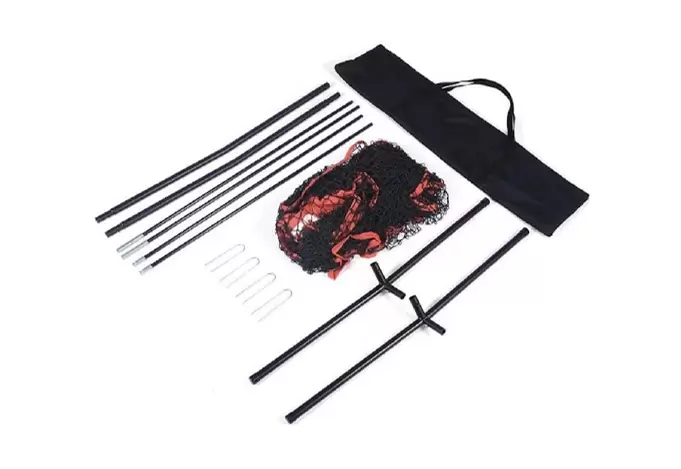
Reinforced steel tubing architecture designed to resist torsional deformation under repeated high-impact cycles
Multi-point welded node system engineered for vibration dispersion across the entire frame geometry
Anti-sway load balancing design that stabilizes frame movement during high-frequency training sessions
Powder-coated protective surface layer to minimize corrosion-driven fatigue over long-term outdoor exposure
Instead of rigid resistance, the system is designed for controlled structural micro-flex behavior, which prevents energy concentration at single failure points.
Net Tension Zoning: Why Rebound Accuracy Depends on Load Distribution
A critical but often overlooked factor in rebounder performance is tension zoning architecture.
Low-quality systems fail because tension is applied uniformly without considering impact distribution differences.
Our system introduces:
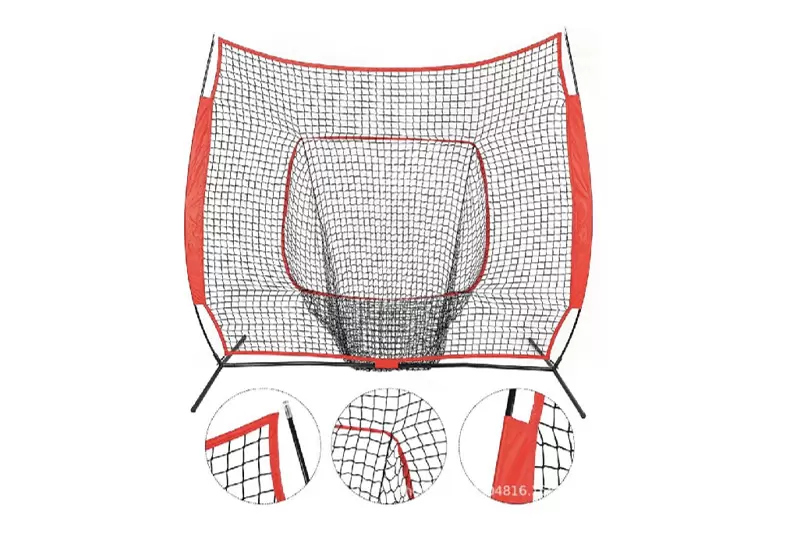
Central impact zone reinforcement for high-frequency ball contact regions
Gradient tension transition from center to outer edges to stabilize rebound angle consistency
Edge-lock stabilization system to prevent long-term slack development under cyclic load
Directional tension alignment that maintains uniform elastic response across all impact zones
This ensures that ball return behavior remains consistent even after thousands of repeated training cycles.
Soccer Rebounder Reviews: Engineering-Based Performance Evaluation Criteria
When analyzing Soccer rebounder reviews, most evaluations focus on surface-level durability or ease of use. However, from an engineering standpoint, performance should be assessed using mechanical stability parameters:
1. Rebound Consistency Index
Measures variation in ball return angle across repeated impacts
Low-quality systems show progressive deviation over time
Our system maintains stable angular variance across long-cycle usage
2. Energy Loss Coefficient
Defines how much kinetic energy is dissipated per impact cycle
Excessive loss leads to weak or unpredictable return behavior
Controlled energy dispersion ensures consistent training feedback
3. Structural Fatigue Resistance
4. Trajectory Repeatability Score
These parameters define true engineering performance beyond conventional consumer-level evaluation.
Application Scenarios: How the System Performs in Real Training Environments
1. Youth Football Development Programs
In early-stage training environments, consistency is more important than complexity:
Predictable rebound angles improve passing accuracy development
Stable first-touch feedback accelerates motor skill learning
Reduced trajectory randomness supports structured skill progression
2. Club-Level Team Training Systems
For structured team training environments:
Enables repetitive passing drills with controlled feedback loops
Supports coordinated multi-player reaction training exercises
Maintains consistent behavior across high-frequency group usage
3. Professional Skill Refinement Training
At advanced levels, precision becomes the focus:
Supports high-speed passing reaction drills
Enables controlled variability for decision-making training
Maintains trajectory integrity under high-impact shooting sessions
4. Backyard and Individual Training Systems
For compact personal setups:
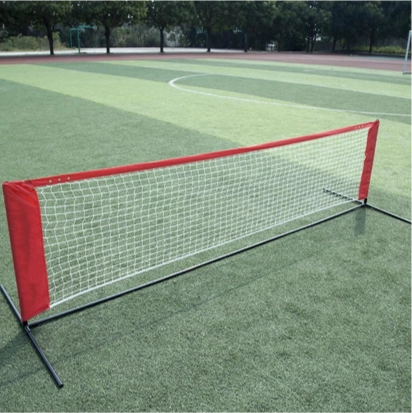
6×4FT optimized structure suitable for limited-space environments
Stable rebound system for solo repetition drills
Lightweight modular frame supports quick repositioning without structural instability
Environmental Stability Engineering: Long-Term Outdoor Performance Control
Outdoor soccer training equipment is exposed to multiple degradation forces that affect long-term performance consistency.
UV Exposure and Material Stability
UV-stabilized polyester fibers reduce molecular breakdown under sunlight exposure
Controlled degradation curve ensures long-term elasticity retention
Prevents stiffness changes that affect rebound consistency
Moisture and Weather Adaptation
Hydrophobic textile treatment prevents water absorption imbalance
Maintains consistent tension behavior across humidity variations
Reduces seasonal performance drift in outdoor environments
Repetitive Impact Fatigue Control
Multi-layer stress distribution prevents localized fiber breakage
Knot reinforcement system reduces long-term deformation accumulation
Frame-net interaction stability minimizes fatigue propagation
Modular Design Flexibility Across Training Environments
A key advantage of our system is modular adaptability across different training environments:
Adjustable frame geometry supports multiple pitch distances and rebound angles
Standardized net tension architecture ensures consistent behavior across unit scaling
Compatible with varied training layouts including wall-adjacent and open-field configurations
Enables multi-unit deployment in academy and school training environments
This flexibility allows consistent training behavior across different facility scales.
Manufacturing Engineering: Why Production Precision Determines Training Quality
At Riches Net, system performance begins at the manufacturing stage.
Our production infrastructure includes:
Fully automated steel tube processing including cutting, punching, bending, and welding systems
Precision-controlled net weaving systems ensuring uniform fiber distribution
Standardized structural inspection processes for load-bearing consistency validation
Multi-stage quality testing simulating repeated impact training conditions
This ensures every unit delivers identical mechanical behavior across production batches.
Decision Framework for Procurement and Training Facility Planning
When evaluating a Best soccer rebounder, decision-makers should prioritize:
Stability of rebound trajectory consistency rather than static material strength
Multi-angle response behavior under different training scenarios
Structural fatigue resistance under long-term cyclic impact loading
Tension zoning design quality affecting long-term training accuracy
These factors directly influence athlete development efficiency and training system reliability.
Conclusion: Soccer Rebounders as Controlled Ball Behavior Systems
A modern soccer rebounder is not a passive training aid—it is a controlled kinetic response system designed to simulate real match ball dynamics with repeatable mechanical precision.
Through multi-angle trajectory control, structured tension zoning, and engineered frame stability, the system developed by Riches Net delivers:
Predictable ball return behavior across varied training intensities
Stable long-term structural performance under continuous use
Consistent training feedback for passing, shooting, and first-touch drills
Modular adaptability for individual, team, and academy-level deployment
Ultimately, the value of a soccer rebounder is not in how it looks or feels, but in how consistently it reproduces controlled football motion physics over time.