From “Net” to “Impact Control System”: Why Modern Baseball Training Infrastructure Has Changed
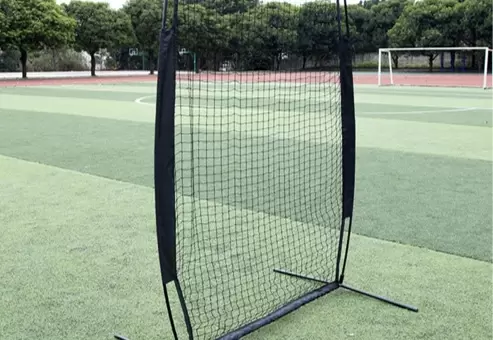
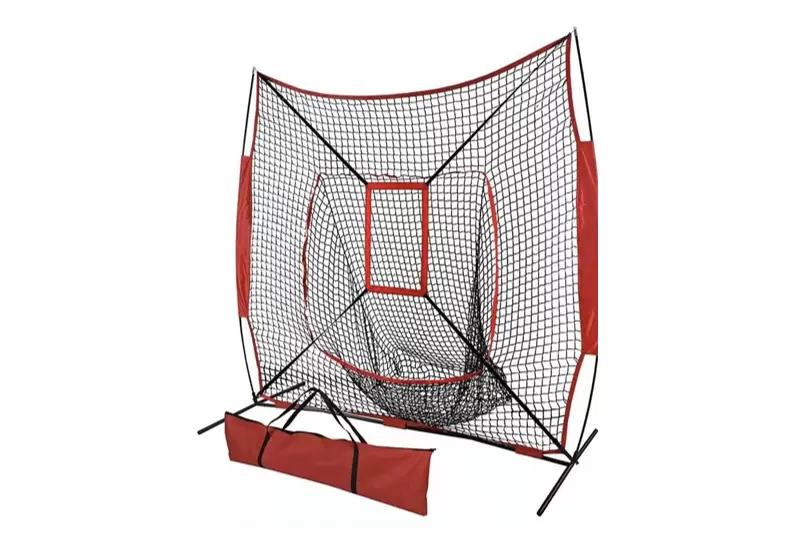
In high-frequency baseball training environments, the equipment is no longer evaluated as isolated accessories. A modern hitting net for baseball functions as an impact energy management system, responsible for controlling ball velocity, absorbing kinetic load, and maintaining consistent rebound or dead-stop behavior across thousands of repeated strikes.
This shift is particularly critical in:
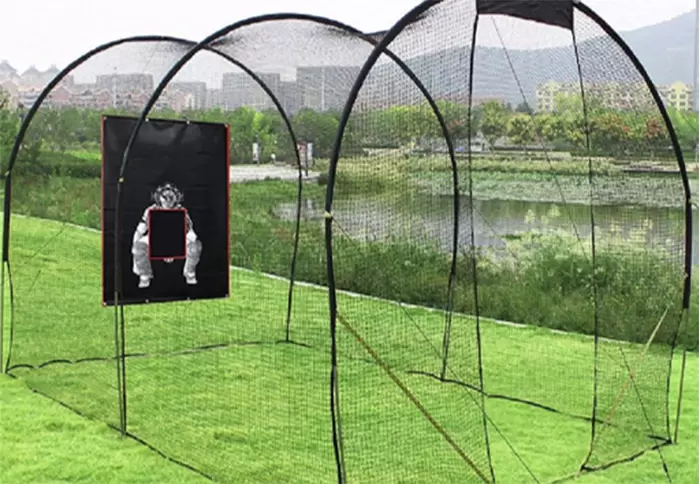
Batting cage environments with continuous high-speed swings
Pitching and throwing drills requiring predictable ball containment
Multi-athlete training sessions in schools and academies
Backyard or compact training setups where safety boundaries are limited
Our engineering team at Riches Net (Huizhou Riches Net Science & Technology Co., Ltd., established in 2000) has developed baseball net systems that go beyond containment. They are designed as controlled energy dissipation structures, where every component—from fiber weave to steel frame geometry—contributes to predictable impact behavior.
The focus is not “catching the ball.”
The focus is controlling what the ball does after impact.
System Architecture of a Professional Hitting Net for Baseball
A professional-grade Baseball Batting Cage Net is not a single-layer barrier. It is a multi-stage mechanical absorption system composed of three functional layers:
1. Primary Impact Absorption Layer (Net Structure Physics)
The first contact layer determines how kinetic energy is initially managed.
Constructed with 7-ply 1.75” high-density black polyester netting
Fiber bundles engineered for directional stress dispersion under high-velocity impact
Controlled elasticity window designed to prevent overextension deformation
Knot stabilization geometry ensures uniform stress transfer across adjacent mesh nodes
This layer is responsible for capturing the instantaneous energy spike generated by bat-ball collision, especially in hitting scenarios exceeding competitive training speeds.
Instead of allowing localized deformation, the structure distributes force into a broader mesh field, reducing the risk of “hot spots” that lead to premature net failure.
2. Multi-Layer Energy Dispersion Buffer Structure (Core Engineering Concept)
The defining innovation of our system is the Multi-Layer Energy Dispersion Buffer Structure, designed specifically for dual-use conditions:
This structure operates through staged energy transfer:
Stage 1: Surface deceleration
The outer mesh layer reduces initial ball velocity by controlled elastic deformation rather than rigid stopping, preventing shock concentration at a single point.
Stage 2: Distributed load transition
Energy is transferred across multiple mesh nodes instead of a single vertical line, reducing peak stress per fiber junction.
Stage 3: Frame-assisted dissipation
Residual force is redirected into the steel structure, where it is absorbed through controlled micro-flex behavior instead of rigid reflection.
This multi-stage system significantly reduces:
Localized net tearing under repeated high-speed hits
Uncontrolled ball rebound angles during training drills
Structural fatigue accumulation at anchor points
The result is a predictable impact response curve, which is essential for technical batting correction and pitching accuracy development.
3. Structural Frame System (Industrial Load Stability Design)
The steel frame is engineered not as a passive support, but as a secondary energy regulation system.
Key structural features include:
Fully integrated welded steel tube architecture designed to resist torsional deformation during repeated lateral impact loading
Reinforced joint nodes optimized for vibration damping across multi-directional force inputs
Anti-sway geometry that stabilizes frame behavior during high-frequency ball impact cycles
Powder-coated industrial finish to reduce corrosion-driven micro-fracture formation in outdoor environments
This ensures that the net system does not gradually lose alignment even after extended high-intensity training cycles.
Baseball Batting Cage Net vs Baseball Net for Throwing: Functional Engineering Differences
Although often grouped together, batting and throwing nets operate under fundamentally different mechanical stress profiles.
Batting Cage Load Environment
In batting applications:
Impact velocity is significantly higher (up to 90+ mph in training conditions)
Energy transfer is concentrated and instantaneous
Net deformation must recover quickly to maintain consistent strike zone geometry
Therefore, the system prioritizes:
Throwing and Pitching Training Environment
In throwing drills:
Impact is more repetitive but lower peak force
Ball trajectory consistency is more important than absorption depth
Training focus is on accuracy repetition and muscle memory
Thus, the system emphasizes:
Uniform tension distribution across full net surface
Stable mid-range elasticity behavior
Reduced directional distortion after repeated ball contact
The same structural system adapts across both scenarios due to calibrated tension zoning and multi-layer force dispersion.
Net Tension Engineering: Why Structural Stability Depends on More Than Material Strength
One of the most misunderstood aspects of baseball net design is the assumption that stronger material alone guarantees durability.
In reality, tension geometry determines system longevity more than fiber strength.
Our engineering approach includes:
Pre-calculated tension mapping across vertical and horizontal axes
Edge reinforcement zones that prevent gradual slack accumulation
Load redistribution pathways that balance center-impact concentration
Controlled elasticity thresholds that prevent permanent deformation under repeated load cycles
This ensures that the net does not develop “dead zones” where rebound or containment behavior changes over time.
Steel Frame and Net Interaction Dynamics in Real Training Environments
In real-world training conditions, failure does not usually originate from the net or frame individually. It comes from interaction instability between both systems.
Common failure mechanisms in low-grade systems include:
Net stretching creating uneven force transfer points
Frame vibration amplifying localized net stress
Anchor point fatigue leading to progressive structural loosening
Our system addresses this through integrated coupling design:
Net tension is distributed directly into frame load paths rather than isolated anchor points
Frame deformation is minimized through controlled energy absorption rather than rigid resistance
Impact force is shared between structural elements, reducing fatigue accumulation in any single component
This results in a stable long-cycle training system capable of handling repeated high-frequency use.
Application Scenarios: How the System Performs in Real Training Environments
1. Youth Baseball Development Programs
Training consistency is essential for early-stage skill acquisition. In this environment, the system provides:
Stable ball containment behavior that supports repeatable swing mechanics development
Reduced unpredictable rebound behavior that can disrupt beginner timing adaptation
Consistent strike feedback across multiple training sessions without structural recalibration
2. Professional Training and High-Intensity Batting Practice
At higher skill levels, equipment must support precision refinement rather than basic repetition.
The system enables:
Stable impact feedback for swing path correction analysis
Controlled energy absorption that prevents training interruption due to net failure
Consistent ball capture behavior under repeated high-speed batting sequences
3. School and Training Camp Deployment Systems
For multi-user environments:
Modular frame configuration allows rapid deployment across multiple training stations
Standardized net geometry ensures consistent training conditions across all units
Reinforced structure supports continuous daily usage cycles without performance drift
4. Backyard and Personal Training Systems
For compact installations:
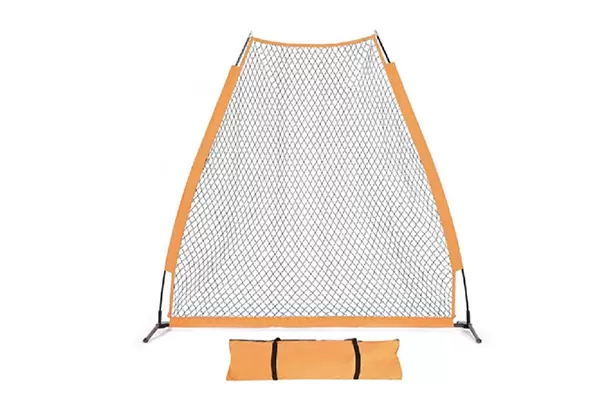
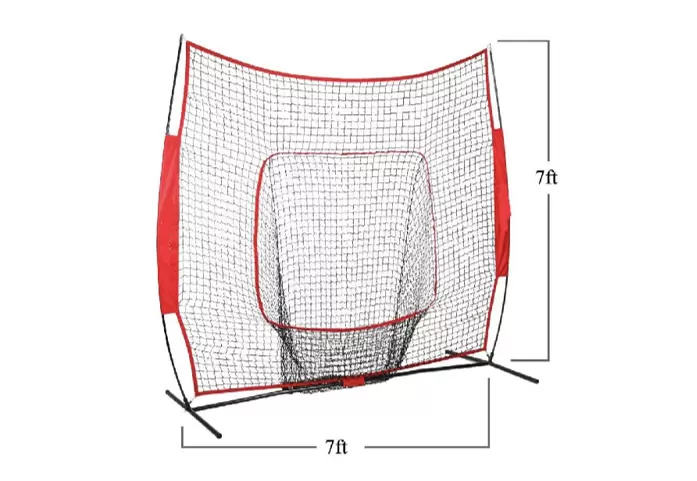
7×7FT and 10×7FT configurations optimized for limited space environments
Stable impact control reduces risk in enclosed training zones
Designed for frequent solo training sessions without structural adjustment requirements
Durability Engineering: Long-Term Fatigue Resistance in Outdoor Conditions
Outdoor baseball training systems face continuous environmental stress that directly affects structural integrity.
UV Exposure Effects on Fiber Systems
Prolonged sunlight exposure can weaken polymer chains in low-grade nets. Our system mitigates this through:
UV-stabilized polyester fiber composition
Controlled molecular structure designed for slow degradation curves
Resistance to brittleness under long-term sunlight exposure
Moisture and Humidity Stability
Environmental humidity can alter tension balance in inferior nets. Our system maintains stability through:
Hydrophobic fiber surface treatment
Moisture-resistant weave geometry that prevents water absorption imbalance
Consistent elasticity behavior under seasonal climate variation
Repeated Impact Fatigue Management
The most critical failure factor is cyclic impact fatigue.
Our solution:
Reduces micro-tearing propagation at knot junctions
Distributes stress over multiple load paths instead of single failure points
Maintains structural elasticity profile across extended usage cycles
Replacement System Engineering: Maintaining Long-Term Performance Integrity
For training facilities and academies, net replacement is not just maintenance—it is performance preservation.
Our Baseball Batting Cage Net replacement system ensures:
Identical tension geometry across replacement units
Standardized frame compatibility for seamless swapping
Pre-calibrated net elasticity behavior to maintain training consistency
Structural alignment markers to prevent installation-induced performance deviation
This prevents training inconsistency caused by mismatched replacement components.
Manufacturing System: Why Production Control Determines Training Reliability
At Riches Net, performance consistency begins at the manufacturing level.
Our production infrastructure includes:
Fully automated steel pipe forming, cutting, and welding systems
Precision-controlled net weaving and knot calibration processes
Integrated quality inspection for dimensional tolerance control
Multi-stage load testing simulations for structural validation
This ensures every unit behaves identically under real-world training conditions.
Decision Framework for Procurement and Training System Designers
When selecting a Baseball Net for Throwing or Batting Cage system, decision-makers should prioritize:
Stability of impact energy distribution rather than static material thickness
Multi-layer force dispersion efficiency across repeated training cycles
Frame-net interaction stability under long-term fatigue conditions
Compatibility with replacement systems for lifecycle continuity
These factors directly influence training effectiveness, safety, and operational cost stability.
Conclusion: Engineering Baseball Training Systems as Controlled Impact Environments
A modern hitting net for baseball is no longer a passive barrier. It is a controlled kinetic regulation system designed to manage impact energy, stabilize training feedback, and ensure repeatable athletic development conditions.
Through multi-layer energy dispersion design, industrial-grade structural framing, and precision tension engineering, the system developed by Riches Net delivers:
Predictable ball containment behavior across high-intensity training
Long-term structural stability under cyclic impact loading
Consistent training feedback across batting and throwing applications
Modular scalability for schools, academies, and professional environments
Ultimately, the goal is not just durability—it is training behavior consistency over time, which defines true engineering quality in modern baseball training infrastructure.