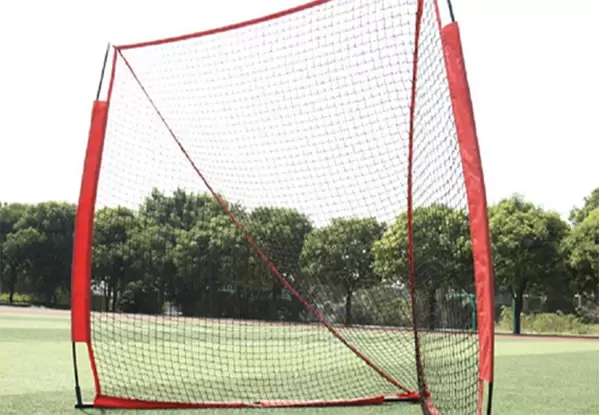
Introduction: Why Modern Rebounder Baseball Nets Are No Longer “Simple Training Tools”
In high-frequency baseball training environments, the rebounder system is no longer just a passive net structure. It functions as a controlled kinetic feedback device, where ball impact energy, net tension distribution, and frame deformation behavior collectively determine the quality of athlete skill development.
For professional training centers, youth academies, and even elite player conditioning programs, the core expectation is not merely “ball return,” but:
Predictable rebound trajectory under varying strike force levels
Minimal energy dissipation across repeated impacts exceeding 5,000–10,000 cycles
Structural stability under long-duration outdoor exposure (UV, humidity, wind load)
Consistent angular return behavior for both pitching and fielding drills
Our engineering team at Riches Net (Huizhou Riches Net Science & Technology Co., Ltd., established in 2000) has spent over two decades refining sports net structural systems. With a fully integrated production chain—from wire extrusion to metal pipe fabrication—we design rebounder systems that behave like controlled mechanical response platforms rather than simple elastic nets.
This article analyzes how modern rebounder baseball net architecture directly affects training efficiency, and why system-level design matters more than isolated material selection.
Structural Foundation of a High-Performance Rebounder System
Unlike conventional training nets that rely primarily on elastic deformation, a high-performance rebounder baseball net integrates three mechanical layers:
1. Energy Capture Layer (Net Surface Mechanics)
The net is not a static mesh; it functions as a dynamic energy absorption matrix.
Constructed using 7-ply 1.75” high-density polyester fibers
Designed to distribute impact stress across multi-node junctions
Reduces localized stress concentration that causes rebound inconsistency
Maintains fiber elongation within controlled elastic limits (typically <12% under high-impact strike conditions)
This ensures that the baseball does not “penetrate” or “over-stretch” the net surface, which is the primary cause of unpredictable rebound angles in low-grade systems.
2. Tension Distribution Framework (Multi-Vector Load Control)
A major weakness in low-cost rebounders is uneven tension decay across the net surface.
Our system introduces a calibrated tension architecture:
Pre-calculated horizontal and vertical tension zoning
Reinforced edge-binding geometry to stabilize perimeter stress
Controlled deformation gradient from center impact zone to outer support frame
Dynamic redistribution of force across multiple anchoring points
This structural logic ensures that even repeated high-speed pitches (above 80–95 mph in training environments) maintain consistent rebound behavior.
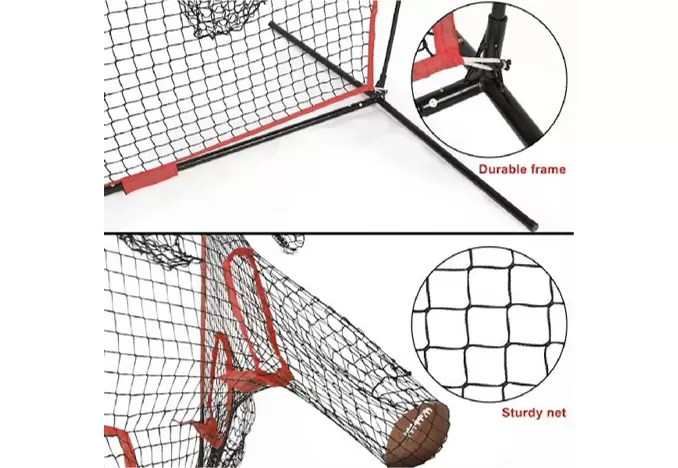
3. Frame Kinetic Stability System (25×1.0mm Steel Tube Architecture)
The structural frame is built using industrial-grade steel tubing with:
25mm diameter / 1.0mm wall thickness load-bearing tubes
Anti-torsion geometry to reduce lateral deformation
Reinforced weld nodes designed for repeated impact vibration cycles
Powder-coated surface treatment to resist oxidation and UV degradation
The key engineering objective is not rigidity alone, but controlled elasticity under dynamic impact loads, ensuring the frame does not absorb energy unevenly.
Multi-Angle Dynamic Rebound Tension System (Core Engineering Innovation)
The defining innovation of our rebounder baseball net is the Multi-Angle Dynamic Rebound Tension System, designed to simulate real-game ball response behavior.
This system modifies rebound physics across three impact categories:
Low-Force Contact (Technical Fielding Drills)
Controlled soft return angle (approx. 30°–45° rebound vector)
Minimal velocity loss for reaction training continuity
Designed for infield reflex repetition drills
Standard Pitch Impact (Youth / Intermediate Training)
Balanced rebound symmetry with predictable mid-range trajectory
Energy dissipation stabilized at controlled elasticity threshold
Enables repetitive catch-and-throw sequencing without trajectory distortion
High-Impact Pitch (Advanced Training / Power Throw Simulation)
Reinforced tension resistance prevents net collapse or rebound collapse
Redirects energy into angular dispersion rather than structural deformation
Maintains consistent rebound velocity ratio even after repeated cycles
This system effectively transforms the net into a multi-condition kinetic response simulator, rather than a single-behavior rebound surface.
Material Engineering: Why Polyester Net Architecture Matters More Than Thickness Alone
A common misconception in rebounder design is that thicker netting equals better durability. However, performance is governed by fiber behavior under cyclic loading, not static thickness.
Our engineering selection focuses on:
7-ply braided polyester construction for directional force resistance
Controlled micro-elastic recovery to avoid rebound lag
Knot stabilization technology to prevent mesh deformation drift
UV-resistant polymer treatment for long-term outdoor exposure stability
The result is a net system that maintains structural integrity after thousands of repetitive impact cycles without progressive rebound deviation.
Frame–Net Interaction Physics: Where Most Rebounders Fail
In traditional rebound systems, the net and frame behave as separate components. This leads to:
Energy loss at attachment points
Uneven rebound angles due to frame vibration
Progressive loosening of net tension over time
Our system resolves this through integrated load path coupling, meaning:
Impact force is transferred into both net and frame simultaneously
Frame absorbs only residual energy, preventing structural oscillation
Net tension remains stable across repeated high-impact cycles
Edge reinforcement prevents micro-slip displacement at anchor points
This creates a synchronized mechanical response system where the net and frame behave as a unified kinetic structure.
Real Training Scenarios and Performance Behavior
1. Youth Baseball Development Programs
Training consistency is critical in early-stage skill formation. Our rebounder ensures:
Stable ball return trajectory for muscle memory development
Reduced unpredictable deflection angles that distort learning patterns
Continuous repetition capability without structural adjustment
2. Professional Pitching Mechanics Training
At higher velocity ranges, rebound consistency becomes a mechanical calibration tool:
Helps pitchers analyze release angle consistency
Provides immediate feedback loop for spin control adjustments
Maintains repeatable rebound behavior under high-frequency throws
3. Private Backyard Training Systems
For individual training environments:
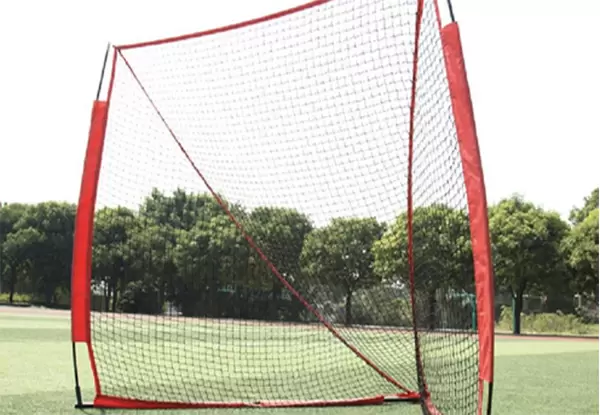
Compact 7×7FT structure optimized for space-limited setups
High durability under non-supervised repeated usage
Stable performance across varied throwing intensities
Engineering Challenges in Long-Term Outdoor Deployment
Outdoor rebound systems face three major degradation vectors:
Wind-Induced Structural Fatigue
Repeated lateral loading can cause frame oscillation. Our system mitigates this through:
Reinforced diagonal load distribution geometry
Anti-sway stiffness reinforcement at frame junctions
Balanced center-of-mass alignment to reduce tilt torque
UV Polymer Breakdown in Net Fibers
UV exposure typically reduces fiber elasticity over time. Our solution includes:
UV-stabilized polyester molecular treatment
Controlled degradation resistance for long-cycle elasticity retention
Fiber coating system that reduces brittleness progression
Moisture-Induced Tension Variation
Humidity can alter net tension distribution:
Hydrophobic fiber treatment stabilizes moisture absorption rate
Maintains consistent elastic modulus across environmental changes
Prevents seasonal rebound performance drift
Rebounder Baseball Net Replacement Engineering Considerations
A critical aspect of long-term system sustainability is replacement compatibility design.
Our rebounder architecture supports modular replacement through:
Standardized mesh anchoring geometry across frame systems
Interchangeable net tension calibration points
Structural alignment markers for rapid reinstallation accuracy
Material-matched replacement nets to preserve rebound consistency profile
This ensures that replacement nets do not introduce new kinetic behavior deviations into the system.
Manufacturing Backbone: Why Supply Chain Control Matters in Performance Consistency
At Riches Net, production integration is not a cost strategy—it is a performance control mechanism.
Our manufacturing capabilities include:
Fully automated steel pipe cutting, punching, bending, and welding systems
In-house wire production for consistent fiber mechanical properties
Controlled mesh knotting systems ensuring uniform structural geometry
Multi-stage quality verification including dimensional tolerance and load simulation testing
This vertical integration ensures that every rebounder unit maintains identical mechanical behavior across production batches.
Decision Framework for Procurement and Training System Designers
When evaluating a rebounder baseball net system, decision-makers should prioritize:
Consistency of rebound trajectory under repeated high-impact cycles rather than static durability claims
Frame-net load coupling efficiency instead of standalone material thickness
Replacement system compatibility for long-term operational stability
Structural fatigue resistance under real outdoor environmental stress conditions
These parameters directly influence training effectiveness and long-term cost stability.
Conclusion: Rebounder Systems as Controlled Training Physics Platforms
Modern rebounder baseball nets are no longer passive sports accessories. They are controlled kinetic feedback systems engineered to simulate real-game ball dynamics under repeatable conditions.
By integrating multi-angle tension control, reinforced frame load distribution, and high-stability polyester net architecture, the system delivered by Riches Net provides:
Predictable ball return behavior across multiple training intensities
Long-term structural consistency under environmental stress
Modular replacement capability without performance drift
Industrial-grade manufacturing precision ensuring system uniformity
This transforms training from subjective repetition into a quantifiable mechanical feedback process, improving both athlete development efficiency and coaching precision.