In modern football development systems, technical repetition quality is no longer determined only by coaching methodology—it is increasingly defined by the precision, stability, and predictability of training equipment behavior under high-frequency use.
For professional football clubs, youth academies, school sports departments, individual technical players, and sports equipment procurement teams, the evaluation of a Soccer Rebound Net or selection of the Best soccer rebound training net manufacturer is no longer based on simple usability criteria such as “can it bounce the ball back.”
Instead, procurement decisions are driven by engineering-level performance indicators:
rebound trajectory consistency under variable shot force
angular stability across repeated impacts
structural resistance to long-duration training stress
environmental durability in outdoor and mixed-weather conditions
feedback precision for technical skill acquisition
This transforms the rebound training net from a simple practice tool into a controlled mechanical training feedback system.
Soccer Rebound Training Net as a Controlled Ball Dynamics System
From an engineering perspective, a soccer rebound training net is not a passive surface. It is a dynamic energy conversion structure that transforms kinetic ball impact energy into controlled rebound motion.
Each interaction between ball and net involves:
impact force distribution
fiber deformation response
structural frame absorption
angular rebound vector generation
Unlike static sports equipment, this system must maintain repeatable physical response behavior across thousands of cycles, often under varying training intensities.
High-Elastic Composite Fiber Net Structure: Controlled Energy Return
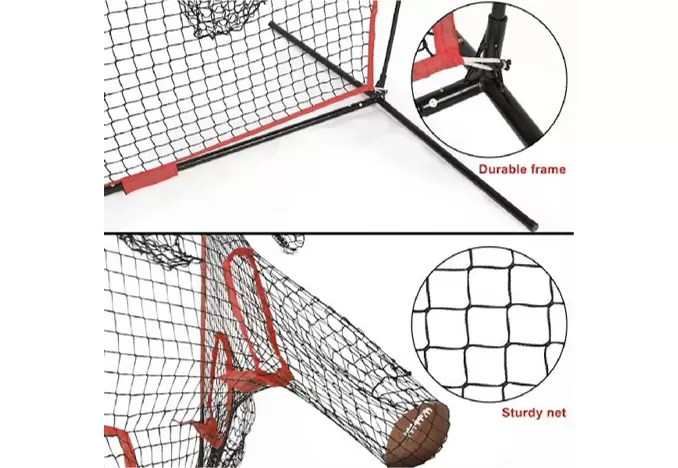
The flagship soccer rebound training net system is constructed using high-elastic composite fiber mesh combined with industrial-grade structural reinforcement materials.
Engineering properties include:
1. Controlled Elastic Energy Absorption
The composite fiber structure absorbs impact energy and releases it in a controlled rebound form, reducing chaotic ball behavior.
2. High-Frequency Impact Resistance
Designed to withstand repetitive striking cycles typical in:
3. Fiber Memory Stability
Maintains structural geometry after repeated deformation cycles without progressive sagging.
4. Surface Tension Consistency
Ensures uniform rebound behavior across different net zones.
Steel Frame Engineering: Structural Stability Under Continuous Impact Load
The rebound net system is supported by a high-strength steel frame structure system, engineered through industrial processes including:
Engineering outcomes:
1. Anti-Deformation Frame Integrity
Maintains geometric stability even under repeated high-force ball impacts.
2. Vibration Dampening Structure
Reduces post-impact oscillation, ensuring faster rebound stabilization.
3. Outdoor Corrosion Resistance
Baked coating provides long-term protection against:
humidity
rainfall exposure
UV degradation
Dynamic Angle Feedback Control System: Core Engineering Innovation
One of the defining technologies in modern Best soccer rebound training net manufacturer systems is the Dynamic Angle Feedback Control System.
This system directly addresses one of the most critical problems in rebound training equipment:
unpredictable ball return angles under variable force input conditions.
Why Angle Control Matters in Football Training Systems
In traditional rebound nets, training inconsistencies occur due to:
uncontrolled deflection angles
uneven tension zones across net surface
unpredictable rebound speed variation
loss of training repeatability
For professional football training, this results in:
reduced technical training efficiency
inconsistent muscle memory development
limited precision improvement in passing drills
How Dynamic Angle Feedback Control System Works
1. Multi-Zone Angle Stabilization Framework
The net surface is divided into controlled response zones that regulate rebound directionality.
2. Force-Responsive Angular Adjustment Behavior
Different ball impact strengths generate proportionally adjusted rebound angles.
3. Continuous Feedback Loop Stabilization
Each rebound event recalibrates tension distribution across adjacent net segments.
4. Predictable Trajectory Output Engine
Ensures that repeated identical inputs produce consistent ball return behavior.
Engineering Value in Professional Training Environments
1. Technical Skill Acceleration for Professional Players
The system enhances:
first-touch control training
passing accuracy repetition
reaction speed under pressure scenarios
Because rebound behavior is predictable, players can focus on technique refinement rather than compensating for inconsistent equipment response.
2. Youth Academy Skill Development Efficiency
For youth training systems, consistency is critical for:
Stable rebound patterns ensure controlled learning progression.
3. Solo Training Optimization for Individual Players
For independent athletes, the system enables:
self-directed passing drills
reaction training without coaching support
continuous technical repetition cycles
This significantly increases training autonomy.
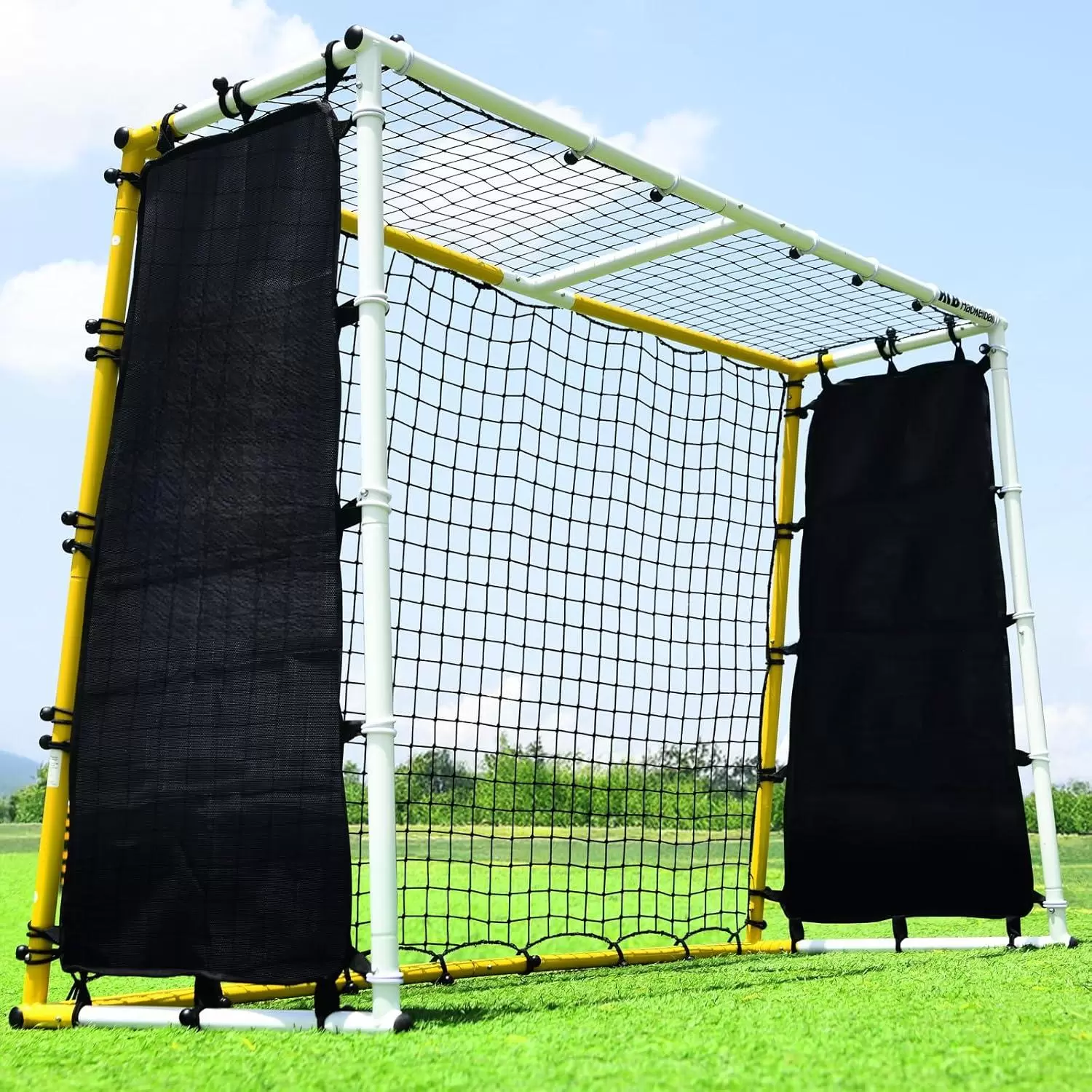
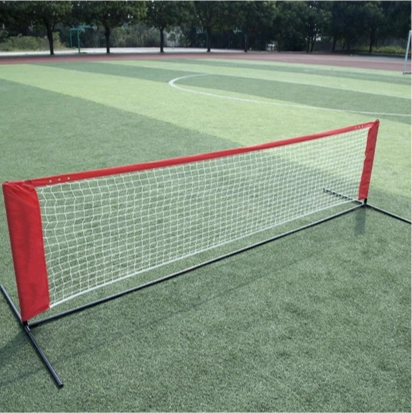
Soccer Rebound Net 7x5FT System Configuration
The standard engineering configuration includes:
Size: 7x5FT
Net Material: black polyester netting with composite fiber reinforcement
Frame Material: high-strength steel structure system
Surface Material: Textilene fabric reinforcement layer
Engineering interpretation of system parameters:
1. 7x5FT Training Geometry Optimization
Balanced for:
close-range technical drills
controlled rebound training
space-efficient installation in training fields
2. Black Polyester Netting Structure
Provides:
consistent visibility contrast for ball tracking
stable mechanical elasticity
reduced UV degradation in outdoor environments
3. Textilene Fabric Reinforcement
Enhances edge stability and reduces structural fatigue at high-tension points.
Real Training Application Scenarios
1. Professional Football Club Training Bases
Used for:
daily technical warm-up routines
passing accuracy repetition drills
reaction-based shooting exercises
The system ensures stable rebound consistency under continuous high-intensity usage.
2. Youth Football Academies
Key benefits include:
structured skill progression training
safe repetitive ball interaction environment
controlled learning feedback systems
3. School Sports Departments
Supports:
PE class skill training modules
multi-student rotational use
simplified setup and breakdown cycles
4. Individual Technical Training Athletes
Enables:
solo passing precision drills
ball control reaction training
high-frequency repetition without partner dependency
Long-Term Outdoor Durability and Environmental Stability
Outdoor football training equipment must withstand:
The system ensures:
stable fiber elasticity retention
corrosion-resistant frame protection
minimal structural fatigue over time
consistent rebound performance across seasons
Manufacturing Capability Behind Riches Net
Huizhou Riches Net Science & Technology Co., Ltd., established in 2000, brings over 23 years of industrial manufacturing expertise in sports net systems.
The company operates a fully integrated production ecosystem including:
wire production systems
rope-to-net conversion manufacturing
automated steel pipe processing (cutting, punching, bending, welding)
baking finish surface treatment systems
scientific quality management framework
Manufacturing advantages:
high dimensional accuracy control
consistent knot and mesh uniformity
scalable production capacity
stable OEM/ODM customization capability
strict quality traceability system
System-Level Value of Best soccer rebound training net manufacturer
The true definition of a Best soccer rebound training net manufacturer is not based on basic product availability. It is defined by the ability to engineer a predictable, repeatable, and structurally stable training feedback system.
Key evaluation dimensions include:
rebound angle predictability under variable force
structural fatigue resistance under high-frequency impact
long-term outdoor durability consistency
training feedback accuracy across usage cycles
manufacturing consistency across large-scale production
Conclusion: Soccer Rebound Net as a Precision Training Feedback System
Modern football training development requires more than traditional equipment—it requires engineered feedback systems capable of reproducing consistent physical training responses under real-world conditions.
Through high-elastic composite fiber construction, reinforced steel frame engineering, and the Dynamic Angle Feedback Control System, the modern Soccer Rebound Net achieves:
stable rebound trajectory control
repeatable training feedback accuracy
high-frequency impact resistance
long-term structural durability
For professional clubs, academies, and training system integrators, this translates directly into:
improved technical training efficiency
reduced equipment variability impact
enhanced player skill development consistency
optimized long-term training investment value
In modern football development systems, the rebound net is no longer a passive training accessory—it is a controlled mechanical performance system that directly shapes player technical progression.