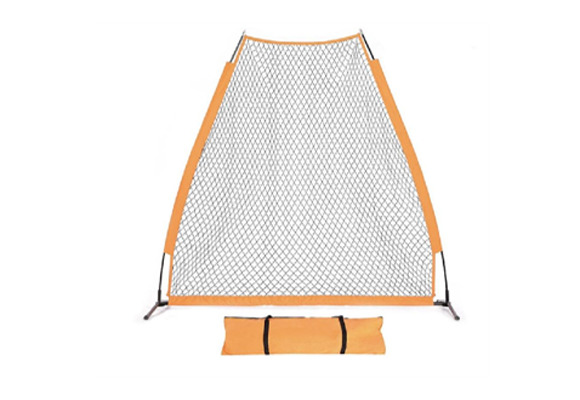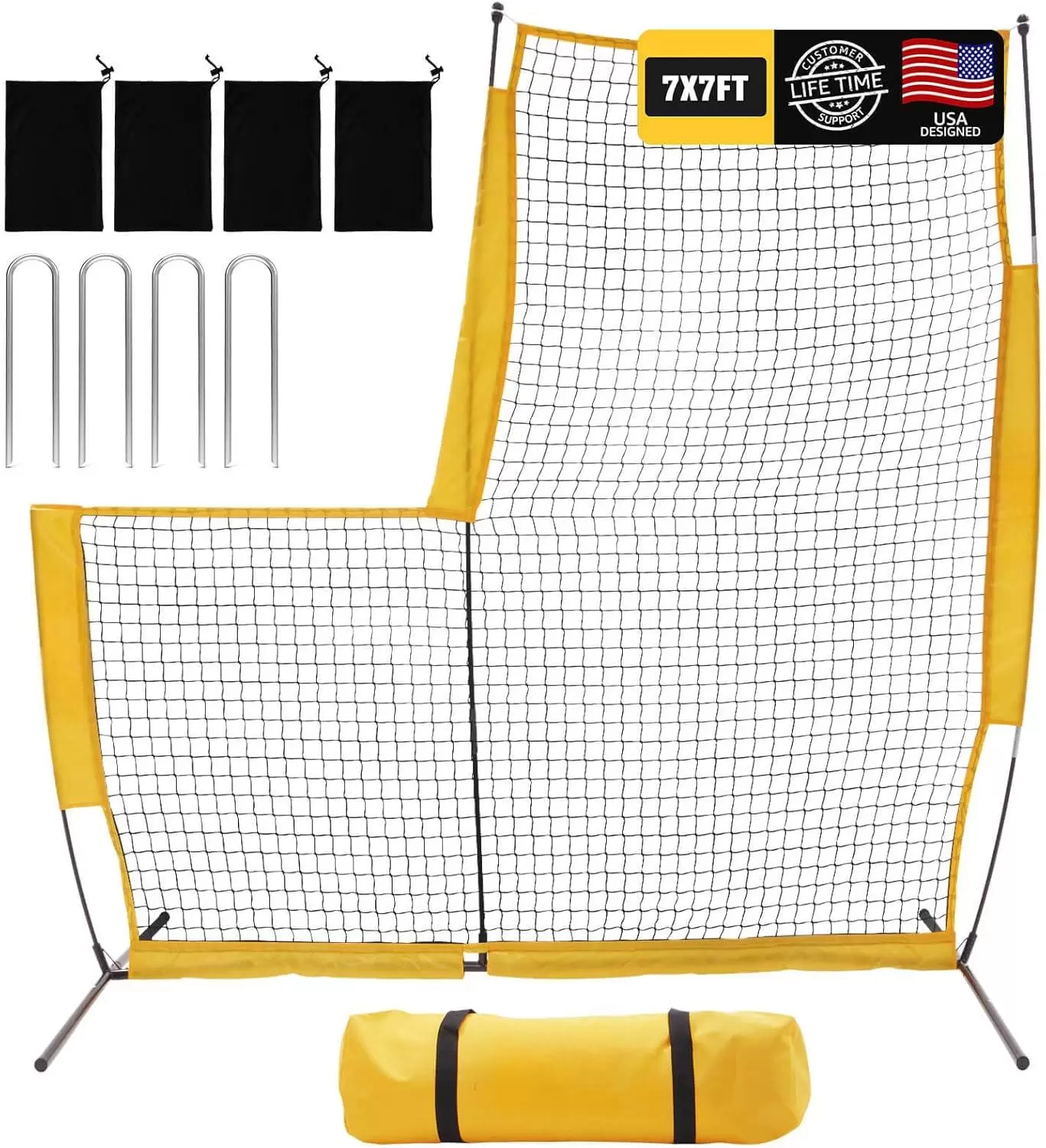
When training facility managers, baseball program directors, and sports equipment procurement teams search for Baseball L screen net replacement or ask What is an L-screen in baseball, their decision is not driven by the existence of a basic protective net. Instead, it is driven by a far more critical engineering requirement: whether the L-screen can consistently protect coaches and pitchers under high-velocity throwing conditions, repeated impact stress, and long-duration training cycles without structural degradation.
In modern baseball training environments, especially in pitching development programs, batting practice cages, and professional academies, the L-screen is no longer a simple accessory. It is a critical safety engineering structure designed to absorb repeated high-speed ball impact while maintaining stability under constant use.
A failure in structural integrity does not only reduce equipment lifespan—it directly increases injury risk, training inefficiency, and operational downtime.
This is why industrial-grade manufacturing and material engineering are essential in modern L-screen systems.
Huizhou Riches Net Science & Technology Co., Ltd., established in 2000 with over 23 years of industry experience, is a specialized manufacturer in sports net systems with a fully integrated production chain from wire manufacturing to finished net structures. The company operates a complete and scientific quality management system, ensuring precise specifications, tight knot structures, accurate dimensions, vibrant color consistency, and long service life across all sports net products.
With fully automated production capabilities covering iron pipe cutting, punching, bending, welding, and baking processes, Riches Net delivers engineered sports net systems designed for high-intensity training environments with stable structural integrity and cost-efficient production scalability.
The flagship Baseball L Screen Net is engineered using:
High-density impact-resistant polyester netting
Reinforced L-shaped steel structural frame
Anti-wind stabilized base support system
High-tension woven net architecture design
Modular assembly and replacement system
Industrial-grade outdoor durability materials
These components are designed specifically to solve the real-world engineering problems associated with high-speed pitching environments, repeated ball impact stress, and long-term structural fatigue.
Understanding What Is an L-Screen in Baseball from an Engineering Perspective
To fully understand What is an L-screen in baseball, it is important to move beyond the conceptual definition and focus on functional engineering purpose.
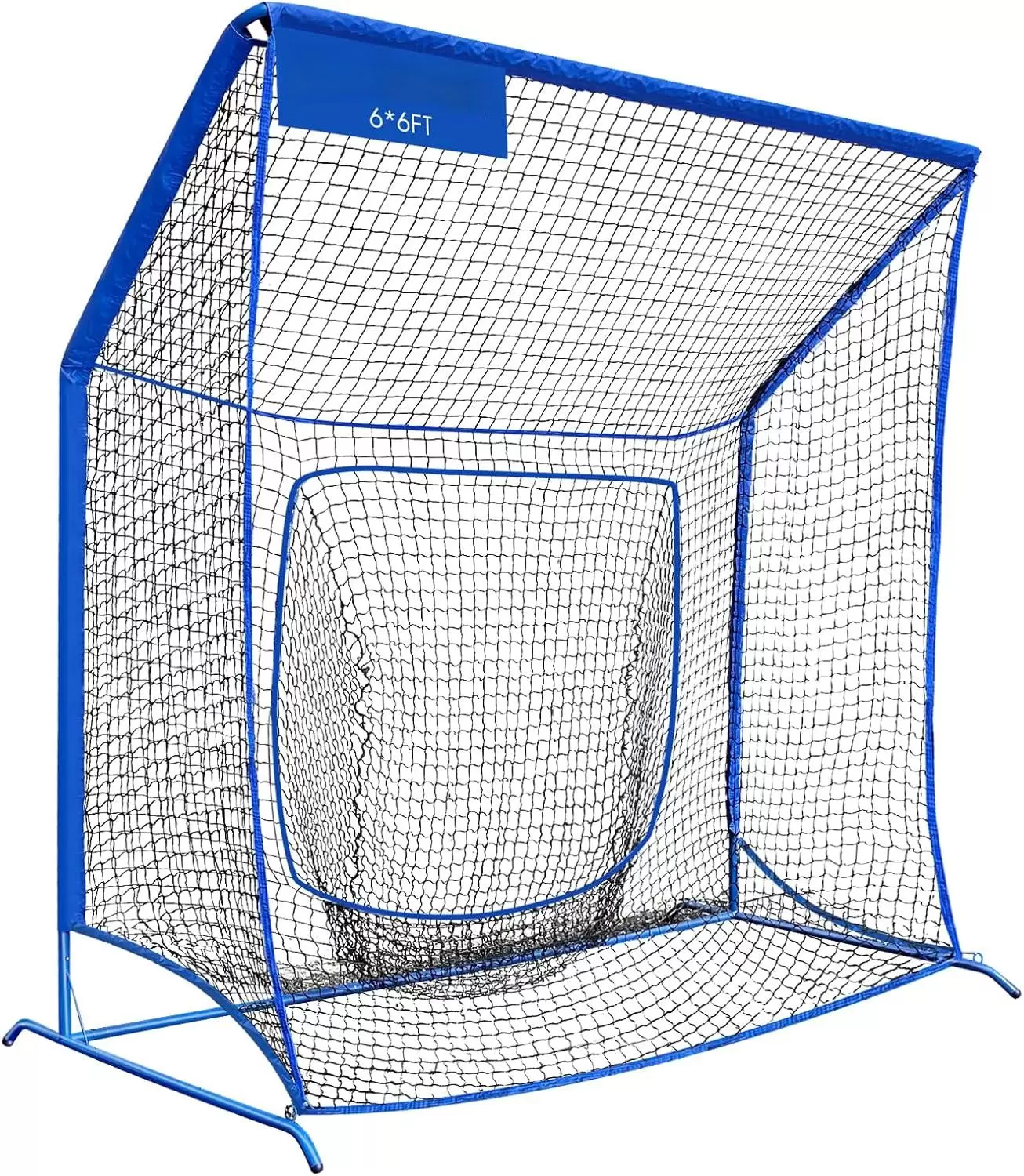
An L-screen is a protective pitching barrier system designed to shield coaches or pitchers during batting practice or pitching drills. However, in professional environments, its function extends far beyond basic protection.
An industrial-grade L-screen must:
Absorb repeated high-speed ball impact
Prevent rebound risk toward the pitcher or coach
Maintain structural stability during continuous use
Resist deformation from long-term stress
Perform consistently in outdoor and indoor environments
Unlike simple nets used for recreational purposes, baseball L-screen systems operate under dynamic mechanical stress conditions, where each ball impact generates localized tension force across both the netting system and the frame structure.
Why Baseball L Screen Net Replacement Is a Critical Operational Decision
The term Baseball L screen net replacement reflects a real operational challenge in training facilities: degradation over time due to repeated high-impact usage.
Common failure points in low-quality systems include:
Net fiber fatigue leading to tearing
Structural frame bending under repeated stress
Loss of tension in net mesh structure
Base instability under uneven ground conditions
Reduced energy absorption efficiency
These failures not only compromise safety but also reduce training effectiveness and increase maintenance costs.
Professional training facilities require replacement systems that restore:
Original impact absorption capacity
Structural tension balance
Frame rigidity
Safety containment integrity
Therefore, replacement decisions are based on performance restoration rather than simple product substitution.
Core Engineering Structure of the Riches Net Baseball L Screen System
The Riches Net L-screen system is built around three core engineering pillars:
High-impact net energy absorption system
Reinforced L-shaped structural load frame
Stabilized multi-surface base system
Each component plays a critical role in maintaining system integrity under high-speed baseball impact conditions.
1. High-Density Polyester Netting with Impact Resistance Design
The net system uses 7-ply high-density polyester structure, engineered to handle repeated high-speed ball impact without rapid fiber degradation.
Multi-Layer Energy Dispersion Mechanism
Instead of absorbing impact at a single point, the net distributes force across multiple fiber layers, reducing localized stress concentration.
This ensures:
Tight Knot Structural Engineering
Precision knot formation ensures uniform tension distribution across the net surface.
This prevents:
High Elastic Recovery Behavior
The polyester material maintains structural memory, allowing the net to recover shape after repeated deformation cycles.
2. High-Strength L-Shaped Steel Frame Structure
The L-shaped structural frame is a critical safety component responsible for maintaining protective geometry during high-speed training.
Reinforced Load-Bearing Geometry
The L-shape design distributes impact force away from the center of structural stress, reducing deformation risk.
Thickened Steel Tube Construction
Industrial-grade steel tubing ensures:
High compressive strength
Resistance to bending under repeated ball impact
Long-term structural stability
Welded Structural Integrity
Fully controlled welding processes ensure:
3. Anti-Wind Stabilized Base System
Outdoor training environments introduce additional structural challenges such as wind load and uneven ground surfaces.
The anti-wind base system ensures:
Ground Adaptation Stability
The system maintains balance on:
Load Distribution Control
Base geometry distributes force evenly to prevent tipping during high-impact sessions.
Wind Resistance Performance
Structural anchoring reduces displacement risk during outdoor training conditions.
High Tension Anti-Impact Weaving Structure Technology
One of the most critical engineering innovations in the Riches Net L-screen system is the high-tension anti-impact weaving structure design.
This system is specifically engineered for:
Professional pitching speeds
Repetitive batting practice cycles
High-frequency training environments
Controlled Energy Absorption Behavior
Instead of rigid rebound, the system absorbs kinetic energy and disperses it across the net structure.
This reduces:
Ball rebound speed toward players
Structural shock transfer to the frame
Long-term fatigue accumulation
Stability Under Professional Pitching Velocity
The net maintains performance under high-speed throws typical in advanced training environments, ensuring consistent protection levels.
Structural Stability in Real Training Environments
1. High-Intensity Pitching Drills
During repeated pitching cycles, the system must withstand continuous impact without structural degradation.
2. Batting Practice Sessions
High-frequency ball strikes require consistent energy absorption performance.
3. Multi-Athlete Training Environments
Shared usage increases structural load variability, requiring uniform durability performance.
4. Outdoor Field Conditions
Exposure to environmental conditions demands long-term material stability.
Modular Replacement and Structural Maintenance Efficiency
A key feature in modern training facility management is Baseball L screen net replacement efficiency.
The modular design of Riches Net systems allows:
Quick net replacement without full frame disassembly
Reduced downtime during maintenance
Lower long-term operational cost
Flexible adaptation to different training environments
This is particularly important for:
Why Structural Integrity Matters More Than Basic Protection
Many low-cost L-screen systems focus only on surface-level protection. However, in real training environments, the critical performance factor is structural integrity under repeated high-energy impact.
Poor structural design leads to:
Frame fatigue deformation
Net tension loss
Reduced impact absorption efficiency
Increased injury risk during training
Riches Net systems are engineered to maintain consistent structural geometry under dynamic load conditions, ensuring long-term reliability.
Manufacturing and Supply Chain Engineering Capability
Huizhou Riches Net integrates a fully industrialized production system including:
Wire production and material processing
Fully automated iron pipe cutting and shaping
High-precision bending and welding systems
Controlled baking and surface treatment processes
Sports net weaving and assembly integration
This end-to-end supply chain ensures:
High dimensional accuracy
Consistent knot tension quality
Structural repeatability across batches
Scalable production capacity for global demand
The company’s 23+ years of experience ensures deep engineering maturity in sports net system manufacturing.
Key Evaluation Criteria for Buyers
When evaluating L-screen systems, procurement and engineering teams should prioritize:
Impact Absorption Stability
Ability to handle repeated high-speed baseball impact without structural degradation.
Frame Structural Rigidity
Resistance to bending and deformation over long-term use.
Net Tension Retention
Consistency of net tightness under continuous load cycles.
Environmental Adaptability
Performance stability in indoor and outdoor training conditions.
Replacement Efficiency
Ease of maintenance and component replacement.
Conclusion
When evaluating Baseball L screen net replacement systems or analyzing What is an L-screen in baseball, the real engineering value lies in structural integrity, impact absorption performance, and long-term durability under professional training conditions.
The Riches Net Baseball L Screen Net is engineered as a high-performance protective system built on high-density polyester impact netting, reinforced L-shaped steel frame architecture, and anti-wind stabilized base systems combined with high-tension anti-impact weaving technology.
By focusing on energy dispersion efficiency, structural rigidity, and long-term training durability, Riches Net delivers a professional-grade L-screen system designed to maintain safety and performance in high-intensity baseball training environments.