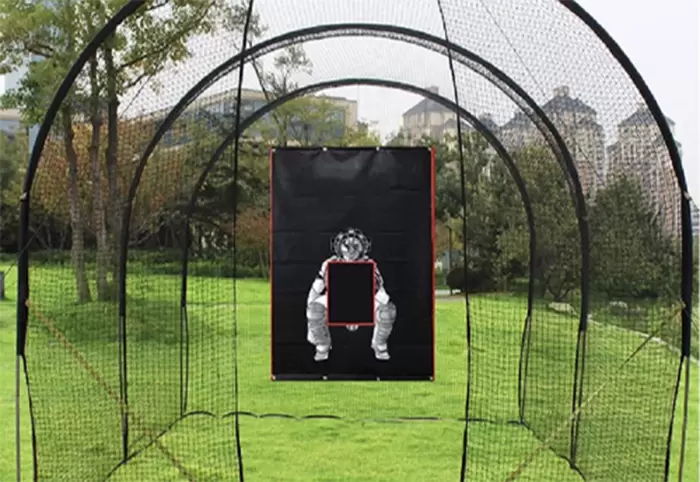
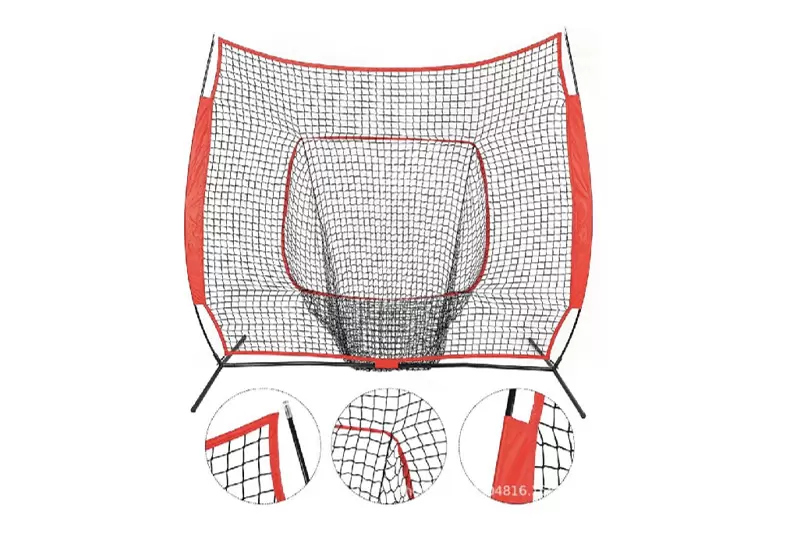
When it comes to baseball and softball training, having a durable practice net is essential for ensuring both safety and long-term usability. Not all nets are created equal—structural design, material quality, and production techniques significantly influence a net’s performance. Understanding these factors can help athletes, coaches, and sports enthusiasts select the right practice net that withstands repeated use and harsh outdoor conditions.
1. Mesh Material and Configuration
The mesh is the most critical component of a baseball practice net because it directly absorbs the impact of fast-moving balls. High-quality nets typically use polyester mesh, which combines flexibility, strike resistance, and long-term durability. For instance, a 7-strand polyester mesh with 1.75-inch spacing provides optimal strength while maintaining sufficient airflow to reduce wind resistance.
The density and thickness of the mesh strands determine the net’s lifespan. A tightly woven mesh reduces the chance of ball penetration and fraying over time. Additionally, specialized ropes and knots improve tensile strength, ensuring the net does not deform under repeated high-velocity impacts. For premium options, you can explore the Riches Net baseball practice net collection, which offers robust polyester meshes suitable for both baseball and softball training.
2. Bottom Bracket and Support Frame
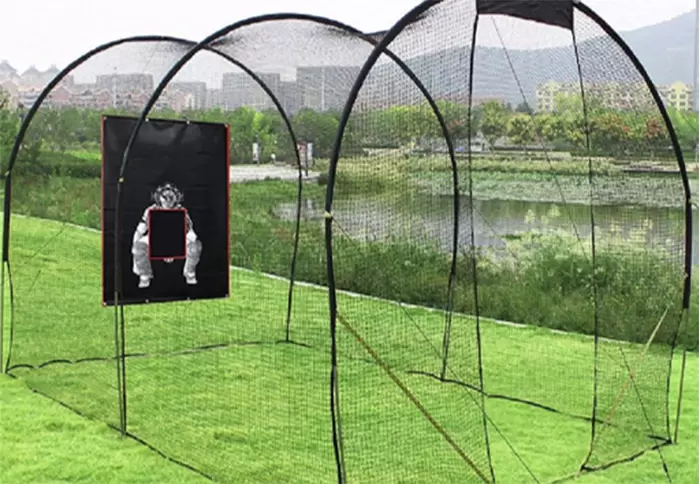
A durable net also relies on a solid structural frame. The bottom bracket often uses baking-painted iron pipes, such as Φ25*1.0mm tubing, which resists bending, twisting, and corrosion. The baking paint layer provides extra protection against moisture and rust, making the net suitable for outdoor use throughout the year.
The support frame is equally important. Lightweight yet strong options, such as Φ12.7mm fiberglass rods, offer excellent toughness while keeping the overall structure manageable for assembly and transport. Fiberglass rods are particularly resistant to snapping, and their high tensile strength ensures the net maintains proper tension, even after repeated impacts.
3. Portability and Carrying Solutions
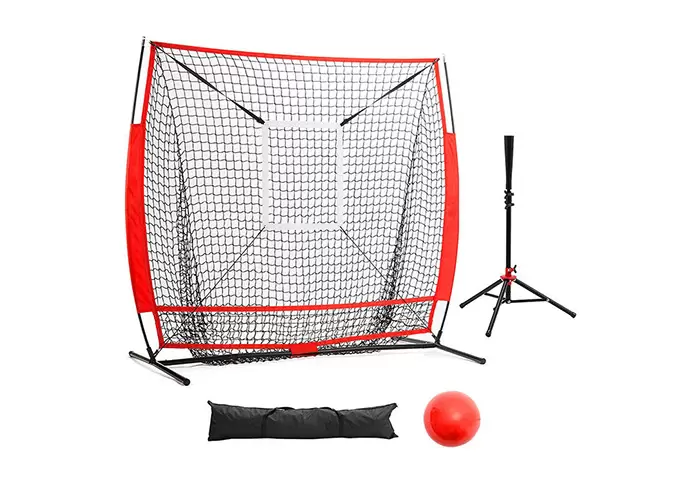
Durability isn’t only about impact resistance; convenience and ease of transport also matter. A well-designed baseball practice net comes with a large-capacity carrying bag made from 600D Oxford cloth, providing high abrasion resistance and water repellence. This design ensures that the net can be easily moved to training fields, indoor gyms, or backyard setups without compromising its structural integrity.
4. Customization Options
Another factor affecting durability is adaptability. Manufacturers like Huizhou Riches Net Science & Technology Co., Ltd. provide customization options including product color, net size, mesh sparseness, and rope thickness. Customization ensures the net meets specific training requirements, prevents overstressing of certain sections, and enhances longevity. Standard sizes often include 5×5 ft, 7×7 ft, and 8×8 ft configurations, but advanced users can select dimensions tailored to their practice environment.
5. Engineering for Impact Resistance
High-impact areas, such as the center of the net, often bear the brunt of repeated balls. Strategic engineering can prolong the net’s life. For instance, reinforcing the central sections with additional mesh strands or using denser knots ensures the net absorbs force without tearing. Similarly, bottom brackets and joint connections are designed to distribute stress evenly across the structure, preventing premature wear or collapse.
6. Environmental and Usage Considerations
Durable baseball nets must withstand various weather conditions, including sun, rain, and wind. Polyester mesh resists UV degradation, while coated iron pipes and fiberglass rods provide protection against moisture and temperature fluctuations. Regular maintenance, such as checking for frayed ropes and tightening supports, further extends the net’s service life.
7. Maintenance and Longevity Tips
To maximize a practice net’s durability, consider the following maintenance tips:
Inspect mesh and ropes regularly: Identify weak points early to prevent tears.
Keep frame dry: Although coated pipes resist rust, minimizing prolonged exposure to moisture helps longevity.
Store properly: Use the carrying bag to protect the net when not in use, avoiding unnecessary stress on structural components.
Avoid overloading: Ensure balls are directed at the net’s primary impact zones and avoid extreme overuse in one area.
By paying attention to material quality, structural integrity, and environmental resistance, athletes can ensure their practice nets remain safe and effective over multiple seasons. High-quality nets from trusted suppliers, like Riches Net, provide a reliable combination of durable materials, robust engineering, and customizable options for various training scenarios.
FAQ
Q1: What mesh thickness is ideal for baseball practice nets?
A: A 7-strand polyester mesh with 1.75-inch spacing offers a balanced combination of impact resistance and airflow.
Q2: How does the support frame affect net durability?
A: Frames made of fiberglass rods or coated iron pipes distribute impact forces evenly and resist bending, twisting, and environmental damage.
Q3: Can practice nets be customized for size and color?
A: Yes, advanced manufacturers provide customization options for size, mesh density, rope thickness, and color to meet specific training needs.
Q4: How often should I maintain my baseball practice net?
A: Regular checks for fraying, loose knots, and moisture exposure, at least monthly during heavy usage, can significantly extend the net’s lifespan.