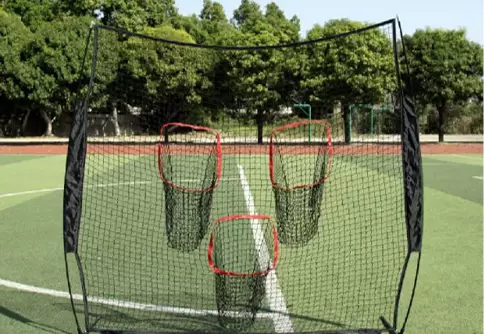
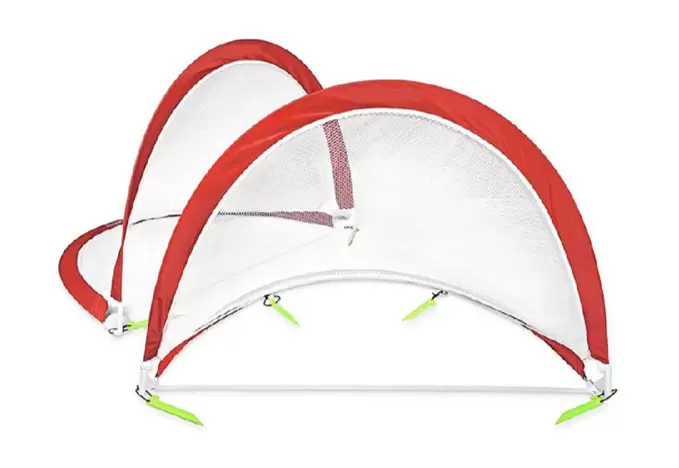
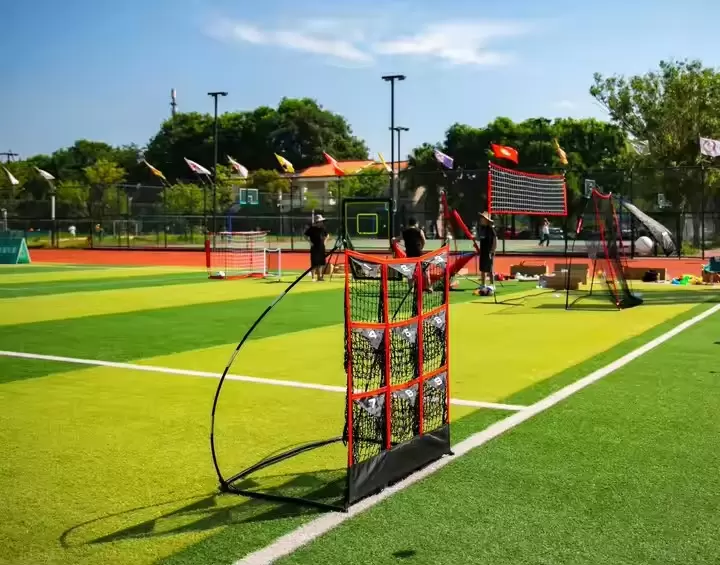
A soccer target training net is only as effective as its stability. On flat surfaces, setup is straightforward, but uneven backyard grass introduces a series of challenges: tilting frames, loose anchors, and constant movement when players strike the net. For coaches, athletes, and families who train regularly, these issues not only disrupt practice but also accelerate wear on the net, frame, and connectors.
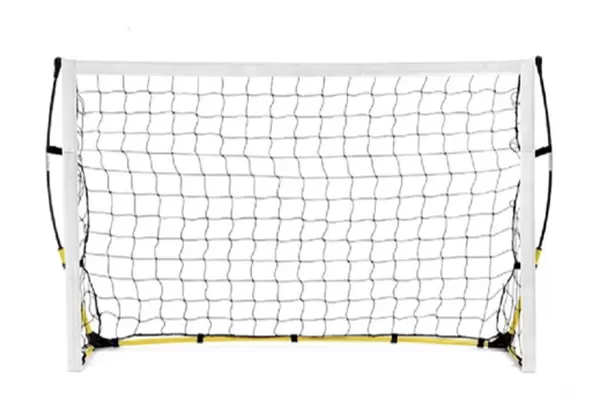
Riches Net has over 23 years of experience in sports net manufacturing, producing durable, high-quality nets with tight knots, accurate dimensions, and long service life. Their outdoor soccer target training nets—available in 64, 84, and 12*6 feet—use polyester knotless mesh and a sturdy painted iron tube bracket. The support frame is made of fiberglass rods for high strength and light weight. These materials are designed to withstand repeated strikes, but they still require correct installation practices, especially on uneven grass.
This guide is designed to help you set up your Riches Net target net on uneven backyard grass with maximum stability, focusing on practical steps, environmental considerations, and long-term maintenance. The goal is to reduce wobble, prevent tipping, and ensure consistent training performance.
1. Why Uneven Grass Causes Instability (and How to Preempt It)
Uneven ground creates a compound problem:
Uneven load distribution: One side of the frame bears more force than the other.
Frame twisting: The support frame can bend or twist when the ground is not level.
Anchor failure: Ground stakes may not hold well in soft or patchy grass.
Net drift: Repeated impacts cause gradual movement.
A stable setup requires a combination of proper frame alignment, secure anchoring, and windproofing. This is especially important for Riches Net target nets because their lightweight fiberglass frame can flex if not properly supported.
2. The Ideal Setup Workflow for Uneven Backyard Grass
Step 1: Identify the Most Stable Zone in Your Yard
Before assembling, walk the area and look for:
If your yard has a slight slope, place the net so the back of the frame faces downhill, using gravity to stabilize it.
Step 2: Level the Ground (Minimal but Effective)
You do not need heavy landscaping. Use simple tools:
A shovel to remove high patches
A garden rake to fill low spots
A small hand tamper to compact soil
The goal is not perfect leveling but reducing the height difference at the four anchor points.
Step 3: Assemble the Frame with Correct Tension
Riches Net uses painted iron tube brackets and fiberglass support rods. When assembling:
Ensure each joint is fully inserted and locked
Align the frame so the base sits flush
Check that the net is not pulling the frame sideways
Proper assembly reduces frame bending and improves stability under impact.
3. Anchoring Techniques That Work on Uneven Grass
Anchoring is the most important stability factor. Even with a strong frame, a target net can shift if anchors are weak.
3.1. Use Long Ground Stakes for Soft Soil
If your grass is soft or recently watered, use longer stakes (at least 10–12 inches). Push them in at a 45-degree angle outward, which improves pull resistance.
3.2. Use Sandbags or Weighted Anchors for Patchy Grass
If the soil is too hard for stakes, or your yard has many roots:
This method is particularly effective for Riches Net targets because the lightweight fiberglass frame benefits from additional downward pressure.
3.3. Use Adjustable Guy Lines for Extra Support
Attach guy lines to the top corners and anchor them away from the net. This creates a triangular tension system that prevents tipping.
Best practice: Use reflective guy lines if training at dusk to prevent tripping.
4. Windproofing Your Soccer Target Net
Wind is a major cause of instability, especially for outdoor nets. Even light winds can move the net over time.
4.1. Add Wind Slits to the Net (if Allowed)
Some nets are designed with wind slits to reduce wind resistance. If your Riches Net target does not have wind slits, consider:
4.2. Position the Net Against a Natural Barrier
Place the net near:
This reduces wind exposure and adds natural support.
5. Maintenance Tips for Long-Term Stability
Proper maintenance extends the life of the net and keeps it stable.
Check frame connections weekly
Inspect knots and mesh for wear
Remove dirt and moisture after rainy days
Store in the Oxford cloth carrying bag when not in use
Riches Net’s quality materials—such as polyester knotless mesh and anti-rust iron tubing—are built for long-term use, but maintenance still matters to preserve performance.
6. Quick Reference Stability Checklist
| Task | Why It Matters | What to Do |
|---|
| Select stable zone | Reduces movement | Choose compact soil |
| Level anchor points | Prevents tilting | Use shovel and tamper |
| Secure frame joints | Prevents frame bending | Fully lock each joint |
| Use long stakes | Increases pull resistance | Insert at 45° angle |
| Add weights | For hard soil | Sandbags or anchors |
| Use guy lines | Prevents tipping | Attach to top corners |
| Windproof placement | Reduces drift | Place near fence/hedge |
| Regular maintenance | Ensures long life | Inspect weekly |
7. FAQ (Common Questions About Uneven Grass Setup)
Q1: Can I set up the net on wet grass?
A: Yes, but the soil may be softer. Use longer stakes or weights to prevent movement.
Q2: Will the fiberglass frame break under strong kicks?
A: Fiberglass rods are designed for high strength and light weight, but correct anchoring and assembly prevent excessive flexing.
Q3: What is the best net size for backyard training?
A: For most home training, 64 or 84 feet is ideal. Larger nets like 12*6 are better for more advanced drills or team practice.
Conclusion
Setting up your Riches Net outdoor soccer target training net on uneven backyard grass requires more than just assembly—it requires a strategy. By choosing the right location, leveling anchor points, securing the frame, using proper anchoring methods, and windproofing the setup, you can achieve maximum stability and consistent training performance.
With over 23 years of manufacturing experience, Riches Net provides durable, high-quality nets with tight knots, accurate dimensions, and long service life. When combined with correct installation techniques, these nets become reliable tools for athletes, coaches, and soccer enthusiasts seeking consistent training results.