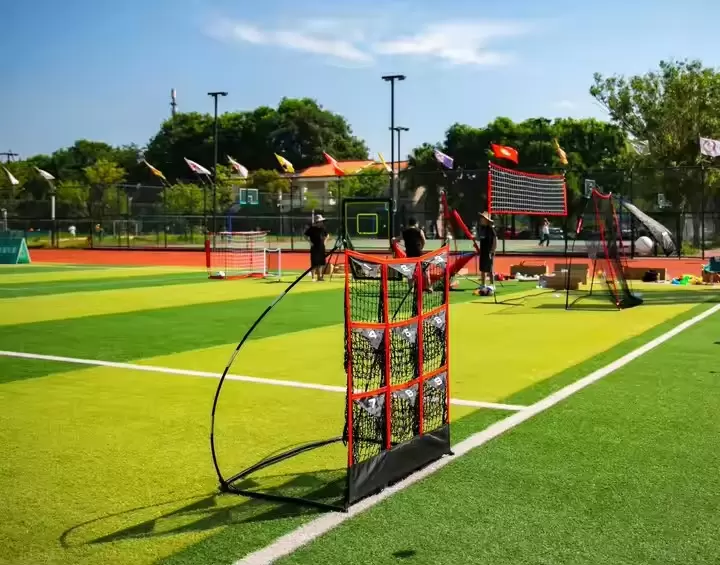
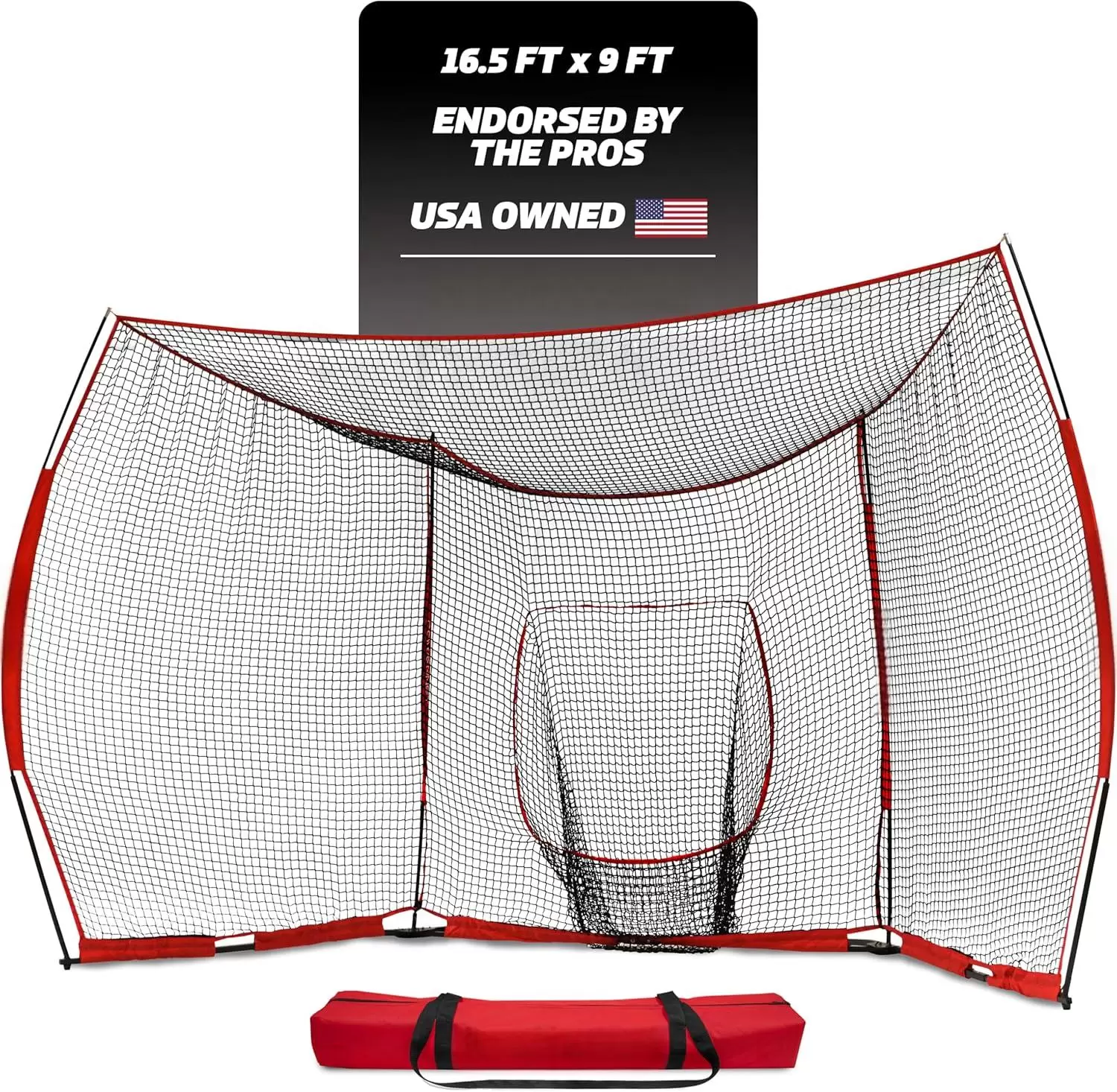
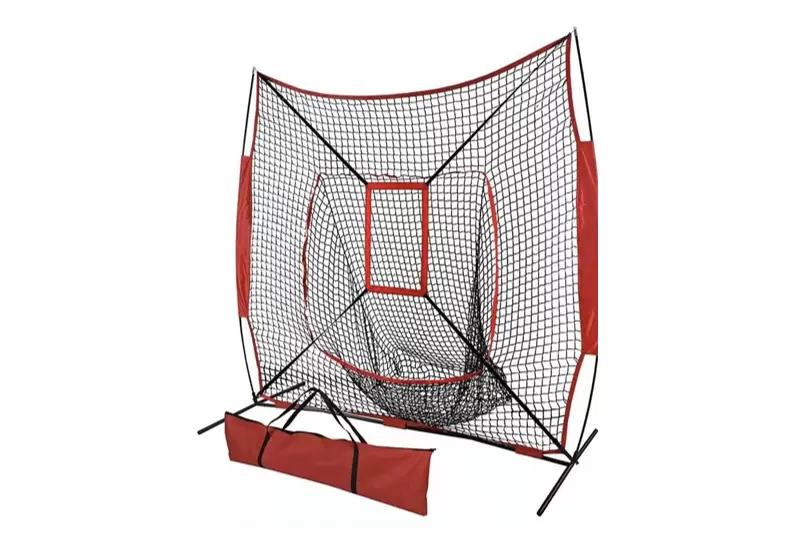
Even premium baseball pitching nets can suffer premature wear if folding and storage are handled incorrectly. Field feedback across training facilities, schools, and home practice environments shows that improper storage is one of the top three causes of early net failure, alongside UV exposure and excessive impact stress. According to industry surveys from sports equipment distributors, nearly 35% of pitching net damage occurs during non-use periods, not during training itself.
For manufacturers like Riches Net, whose pitching nets are engineered with tight knotting, accurate dimensions, and high-tensile fibers, correct folding and storage practices are what ultimately allow these material advantages to translate into real-world service life.
This article focuses exclusively on practical, non-obvious folding and storage strategies that protect net structure, metal frames, and connection points—without repeating basic definitions or generic advice.
A New Perspective: Storage as a Mechanical Stress Event
Most users treat storage as a passive state. In reality, folding and storage impose concentrated mechanical stress on three areas:
When nets are folded randomly or compressed unevenly, stress accumulates in localized zones. Over time, this leads to knot slippage, fiber fatigue, and frame deformation.
Riches Net addresses this risk at the manufacturing level by combining scientifically spaced knot structures with precision-processed iron pipe fittings, produced using fully automated cutting, punching, bending, and welding systems. However, correct user-side handling remains essential.
Step-by-Step Folding Logic That Preserves Net Geometry
1. Neutralize Tension Before Any Fold
Never fold a pitching net while it is partially tensioned. Residual tension forces fibers into unnatural curvature, accelerating micro-fractures.
Best practice: release all attachment points and allow the net to rest flat for at least 2–3 minutes before folding.
This aligns with material fatigue research published by polymer engineering associations, which confirms that stress relaxation significantly reduces long-term fiber damage.
2. Fold Along Original Manufacturing Axes
Riches Net pitching nets are designed with symmetrical load distribution, meaning there are natural folding axes that match the knitting pattern and frame geometry.
Actionable rule:
Always fold the net along its original vertical and horizontal grid lines—never diagonally.
Diagonal folding forces knots into torsion, which can loosen even tightly knotted net structures over time.
3. Segment Folding Instead of Full Compression
Avoid rolling or compressing the entire net into a single bundle. Instead:
This segmented approach prevents pressure concentration and preserves accurate net dimensions, a key factor in maintaining pitching accuracy during future use.
Frame Storage: Protecting Metal Integrity and Weld Points
Separate Net and Frame Whenever Possible
Although many pitching nets allow combined folding, long-term storage is safer when net and iron pipe frame are stored separately. This prevents metal edges from abrading rope fibers.
Riches Net’s vertically integrated supply chain—covering wire production, rope manufacturing, net weaving, and iron pipe processing—ensures compatibility between components. Still, separation during storage maximizes lifespan.
Optimal Frame Orientation During Storage
Store iron pipe frames:
Avoid leaning frames at sharp angles, which introduces bending stress at welded joints. Industry testing shows that micro-deformation at weld points often begins during improper storage, not during use.
Environmental Storage Conditions That Actually Matter
Humidity Control Over Temperature Obsession
While temperature extremes are often discussed, humidity is the more critical variable for net longevity.
Ideal relative humidity: 40–60%
Avoid sealed plastic bags in humid environments
Use breathable fabric storage covers
Excess humidity accelerates fiber aging and may compromise metal coatings over time.
Light Exposure During Storage
Even when not in use, prolonged exposure to indirect sunlight can degrade polymers. Studies from sports material laboratories indicate that UV exposure during storage accounts for up to 15% of cumulative material degradation in outdoor sports nets.
Store pitching nets in shaded or enclosed spaces whenever possible.
Storage Frequency Strategy: Match Handling to Usage Cycles
Different users should adopt different folding frequencies:
| Usage Scenario | Recommended Folding Frequency |
|---|
| Daily training facility | Weekly deep fold, daily loose lay |
| School or club use | After each session |
| Home practice | After every 2–3 uses |
Frequent aggressive folding increases wear; balanced handling extends net service life.
Transport vs. Storage: Two Different Protocols
Transport folding prioritizes compactness. Storage folding prioritizes structural preservation.
Key difference:
Transport: tighter, temporary
Storage: looser, evenly distributed
Never use transport folding methods for long-term storage.
Maintenance During Storage: Low Effort, High Return
Before storing:
These quick checks reduce the likelihood of cumulative damage. According to sporting goods maintenance studies, preventive inspection can extend net lifespan by 20–30%.
FAQ: Advanced Questions from Buyers and Facility Managers
Q1: Does frequent folding reduce net lifespan even if done correctly?
Correct folding minimizes damage. Improper folding is the real risk factor.
Q2: Should pitching nets be stored under tension to keep shape?
No. Static tension accelerates fiber creep and knot fatigue.
Q3: Is wall-mounted storage recommended?
Yes, if weight is evenly supported and the net hangs freely without sharp bends.
Q4: Do iron pipe frames require protective coating maintenance?
Quality frames produced with controlled baking and finishing processes, like those from Riches Net, require minimal maintenance, but dry storage is essential.
Why Manufacturing Quality Still Sets the Ceiling
Even the best storage practices cannot compensate for poor materials. Riches Net’s more than 23 years of industry experience, combined with a complete and scientific quality management system, ensures:
Tight and stable knotting
Accurate net dimensions
Vibrant, fade-resistant colors
Long service life under repeated folding cycles
With a highly efficient supply chain spanning rope, net, and iron pipe production, Riches Net pitching nets are engineered for both performance and durability, giving users a higher margin of error and longer usable lifespan.
Final Takeaway: Storage Is a Skill, Not an Afterthought
Extending the service life of a baseball pitching net is not about overengineering or expensive accessories. It is about respecting the mechanical logic of the product—from fiber behavior to frame stress distribution.
When high-quality manufacturing meets disciplined folding and storage habits, pitching nets remain accurate, stable, and reliable for years, not seasons.
For buyers, trainers, and facility managers, mastering these folding and storage techniques is one of the most cost-effective performance decisions you can make—without changing your equipment at all.