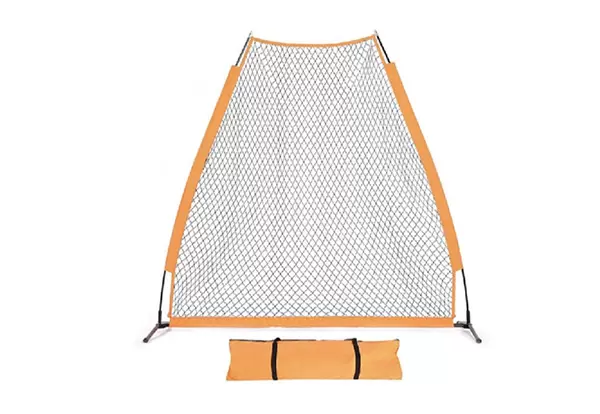
In professional rugby stadium engineering, a rugby sideline barrier net system is not a passive separation mesh. It is a controlled impact absorption and crowd boundary stabilization structure designed to manage high-energy lateral collisions, spectator pressure fluctuations, and repeated mechanical loading along the field perimeter.
For procurement engineers and sports facility designers evaluating Rugby sideline barrier net for sale, the primary technical concern is not basic containment, but how effectively the system converts unpredictable human impact energy into distributed structural tension while maintaining long-term geometric stability under outdoor environmental stress.
In high-intensity match environments, Best rugby sideline barrier net anti crowd interference systems must maintain consistent structural response under:
High-speed player sideline collisions
Sudden crowd leaning or surge pressure
Wind-induced lateral oscillation
Repeated installation and seasonal tension cycling
Failure is not defined by visibility of damage alone, but by micro-level structural degradation such as progressive tension loss, localized fiber fatigue, and anchor-point stress accumulation.
Impact Mechanics in Rugby Sideline Barrier Net Systems
A rugby sideline barrier net operates through a multi-stage energy dissipation mechanism, where kinetic energy is progressively reduced rather than abruptly stopped.
When a collision occurs near the sideline:
Initial impact is absorbed by elastic deformation of high-tensile fibers, which prevents immediate force concentration at a single contact point.
The load is transferred across knotless mesh geometry, which redistributes stress vectors horizontally and vertically rather than allowing linear stress propagation.
Secondary structural poles absorb residual energy through controlled flex behavior, preventing rigid rebound that could amplify injury risk.
Final energy dissipation occurs through anchoring system micro-displacement, which stabilizes long-duration stress equilibrium across the installation base.
This layered response ensures that no single structural element carries the full impact load, which is critical in preventing catastrophic failure during peak match intensity.
Material Engineering: 7-Strand Polyester and UV-Stabilized Fiber Structure
The structural integrity of Rugby sideline barrier net for sale systems depends heavily on fiber architecture and polymer stabilization.
Riches Net, established in 2000 with over 23 years of manufacturing experience, builds its systems using a vertically integrated production chain covering rope manufacturing, mesh fabrication, and steel fitting processing. This integrated supply structure ensures consistent mechanical performance across all net components.
The core net structure is built on:
7-strand 1.75-inch black polyester knotless mesh, engineered to distribute tensile load evenly across multiple micro-filament pathways rather than relying on single-point knot reinforcement, which reduces localized stress concentration during high-impact events
UV-stabilized polymer treatment that slows photodegradation under prolonged stadium exposure, maintaining tensile integrity even after repeated seasonal sunlight cycles and reducing long-term elasticity loss
High-density fiber alignment that improves directional load resistance, ensuring that impact force is redirected along engineered tension axes instead of causing mesh deformation collapse
This combination allows the net system to maintain consistent mechanical behavior even after repeated exposure to high-impact sporting environments.
Structural Support System: Steel Pole Load Transfer Engineering
Barrier net performance is not determined solely by mesh strength; the structural steel support system defines how effectively impact energy is transferred into the ground.
In high-performance installations:
Steel poles are engineered with controlled flex tolerance, allowing minimal deformation under sudden lateral loads while preventing brittle structural failure
Base anchoring systems are designed to distribute load into subsurface ground layers, reducing localized stress accumulation at single mounting points
Modular connection architecture allows load redistribution between adjacent support segments, preventing isolated overload failure zones
Without properly engineered support structures, even high-strength netting systems will experience premature failure due to uneven force transfer.
High-Tension Dynamic Load Distribution System
One of the key engineering advantages of Best rugby sideline barrier net anti crowd interference systems is the ability to maintain controlled tension equilibrium across varying environmental conditions.
The system uses:
Pre-tension calibration to ensure uniform stress distribution before match operation begins
Dynamic tension balancing that compensates for micro-level deformation during repeated impact cycles
Multi-point anchoring synchronization that prevents localized sagging under asymmetric crowd pressure
This design prevents the formation of weak deformation zones, which are typically the first point of failure in low-engineering barrier systems.
Environmental Resistance: Long-Term Outdoor Performance Behavior
Rugby sideline barrier net systems operate in continuously changing environmental conditions, including:
High UV radiation exposure during summer match seasons
Heavy rainfall leading to moisture-induced fiber weight variation
Strong wind loads generating oscillatory tension cycles
Temperature-driven expansion and contraction of both fiber and steel components
Engineering-grade systems must maintain structural consistency under all these conditions by:
Minimizing fiber creep under sustained tensile load
Preventing corrosion at steel-to-fiber interface points
Maintaining knotless mesh geometry stability under repeated wet-dry cycles
Preserving anchor-point rigidity under seasonal soil condition variation
Anti-Crowd Interference Structural Behavior
The primary functional requirement of a rugby sideline barrier net is controlled crowd interference mitigation.
Instead of rigid obstruction, the system uses controlled energy absorption behavior:
Crowd pressure is partially absorbed through elastic deformation rather than being fully resisted
Force is redistributed across multiple vertical mesh columns to prevent localized structural collapse
Edge tension reinforcement prevents lateral crowd-induced deformation near access points and sideline corners
This ensures that crowd interaction does not translate into structural instability or safety hazards for players and officials.
Application Scenarios of Rugby Sideline Barrier Net Systems
Professional Rugby Stadiums
Require high-impact resistance systems capable of maintaining structural integrity under repeated high-speed sideline collisions and unpredictable crowd pressure events.
School and Training Facilities
Require balanced durability systems that maintain consistent tension stability under frequent installation cycles and varied user interaction levels.
Tournament and Temporary Event Installations
Require modular deployment systems that can maintain calibrated tension across rapidly assembled structures without compromising safety performance.
Multi-Use Sports Complexes
Require adaptive structural systems capable of handling different sports impact profiles while maintaining consistent boundary separation performance.
Key Selection Parameters for Engineering Procurement
When evaluating Rugby sideline barrier net for sale, technical decision-makers typically focus on:
Impact resistance rating, which defines how much kinetic force the net system can absorb before structural deformation becomes irreversible, directly affecting player safety during high-speed sideline collisions
Net height configuration, which determines the vertical containment boundary and influences how effectively crowd proximity is controlled during high-pressure match environments
Structural pole spacing and load distribution design, which defines how impact forces are transferred across the system and directly affects long-term stability under repeated stress cycles
Material aging resistance, which determines how long the net can maintain tensile performance under UV exposure and environmental weathering
Compliance with professional stadium safety standards, which determines whether the system can be deployed in regulated competitive environments without structural modification
High-Strength Manufacturing Capability of Riches Net
Riches Net leverages a fully integrated production system, including automated iron pipe manufacturing, cutting, punching, bending, welding, and baking processes. This allows tight control over structural consistency between net and support systems.
Key manufacturing advantages include:
Precision-controlled mesh dimensioning that ensures consistent load distribution behavior across production batches
Tight knotless mesh construction that eliminates traditional knot-based stress concentration points
Multi-stage quality inspection system ensuring dimensional accuracy and tensile uniformity across all structural components
This integrated production chain ensures that both netting and structural support components behave as a unified engineering system rather than independent parts.
Conclusion
A professional rugby sideline barrier net system is a structural energy management system designed to control impact, stabilize crowd boundary interaction, and maintain long-term mechanical integrity under high-stress stadium conditions.
The real engineering value of Best rugby sideline barrier net anti crowd interference systems lies not in surface-level containment, but in how effectively they distribute kinetic energy, maintain tension equilibrium, and resist environmental degradation over repeated match cycles.
For stadium engineers and procurement decision-makers, selecting a system requires deep evaluation of material structure, load transfer design, and long-term tensile stability under real competitive environments—not just basic physical separation capability.
Riches Net’s engineering approach integrates material science, structural mechanics, and manufacturing precision to deliver barrier net systems capable of maintaining stable anti-crowd interference performance in demanding professional rugby environments.