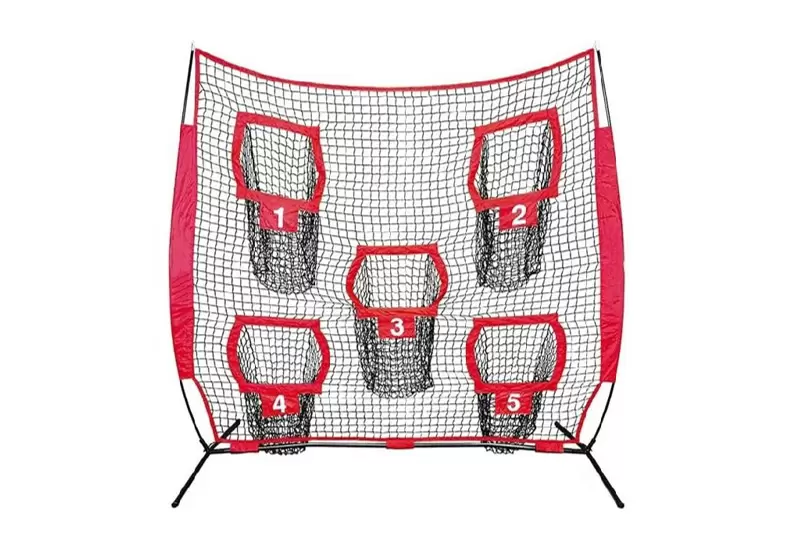
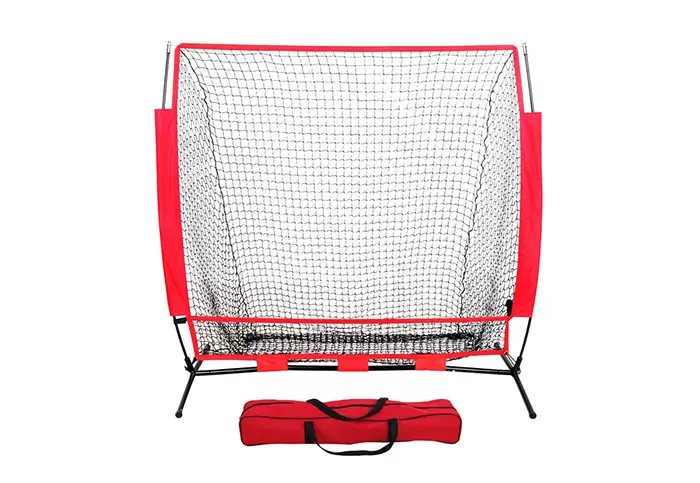
In modern golf training environments, safety containment systems are no longer optional accessories but core infrastructure components that directly determine operational safety, training efficiency, and facility risk management.
The Best golf protective barrier net is engineered specifically to manage high-velocity golf ball impacts—particularly from driver shots that can exceed 150 mph—while maintaining long-term structural integrity under continuous outdoor exposure.
For commercial driving ranges, golf academies, and private training facilities, the selection of a golf protective barrier net manufacturer in china is not simply a procurement decision. It is a technical evaluation of material engineering capability, structural design precision, and long-term durability performance under real-world impact cycles.
Riches Net, established in 2000, has accumulated more than 23 years of manufacturing experience in sports net systems. Through integrated production capabilities covering wire processing, net weaving, and metal pipe fabrication, Riches Net delivers engineered barrier systems designed for high-impact sports environments with strict safety requirements.
Engineering Structure of Best Golf Protective Barrier Net Systems
A professional Best golf protective barrier net is fundamentally a kinetic energy management system rather than a simple physical barrier.
When a golf ball is struck—especially with a driver—the initial impact energy must be absorbed, redistributed, and gradually dissipated across the net structure to prevent localized stress failure.
This is achieved through a multi-layer engineering design composed of:
High-density polyester net matrix
Controlled elasticity fiber tension system
Reinforced edge binding for load transfer stability
Structural frame anchoring system for lateral force resistance
Each layer plays a distinct mechanical role in ensuring that high-speed impact energy is not concentrated at a single failure point.
Impact Resistance Design for High-Speed Golf Ball Interception
One of the most critical technical requirements for any golf protective barrier system is its ability to withstand repeated high-velocity impacts without structural degradation.
Driver shots introduce extreme localized force upon impact, which can cause micro-tearing in low-grade nets or progressive tension loss in poorly engineered systems.
To address this, Best golf protective barrier net systems rely on energy dispersion architecture, where the net is designed to stretch slightly under load, converting direct impact force into distributed tension across multiple fiber intersections.
This prevents:
Localized mesh rupture under repeated strikes
Progressive loosening of net tension over time
Structural deformation in high-impact zones
Loss of rebound consistency affecting safety coverage
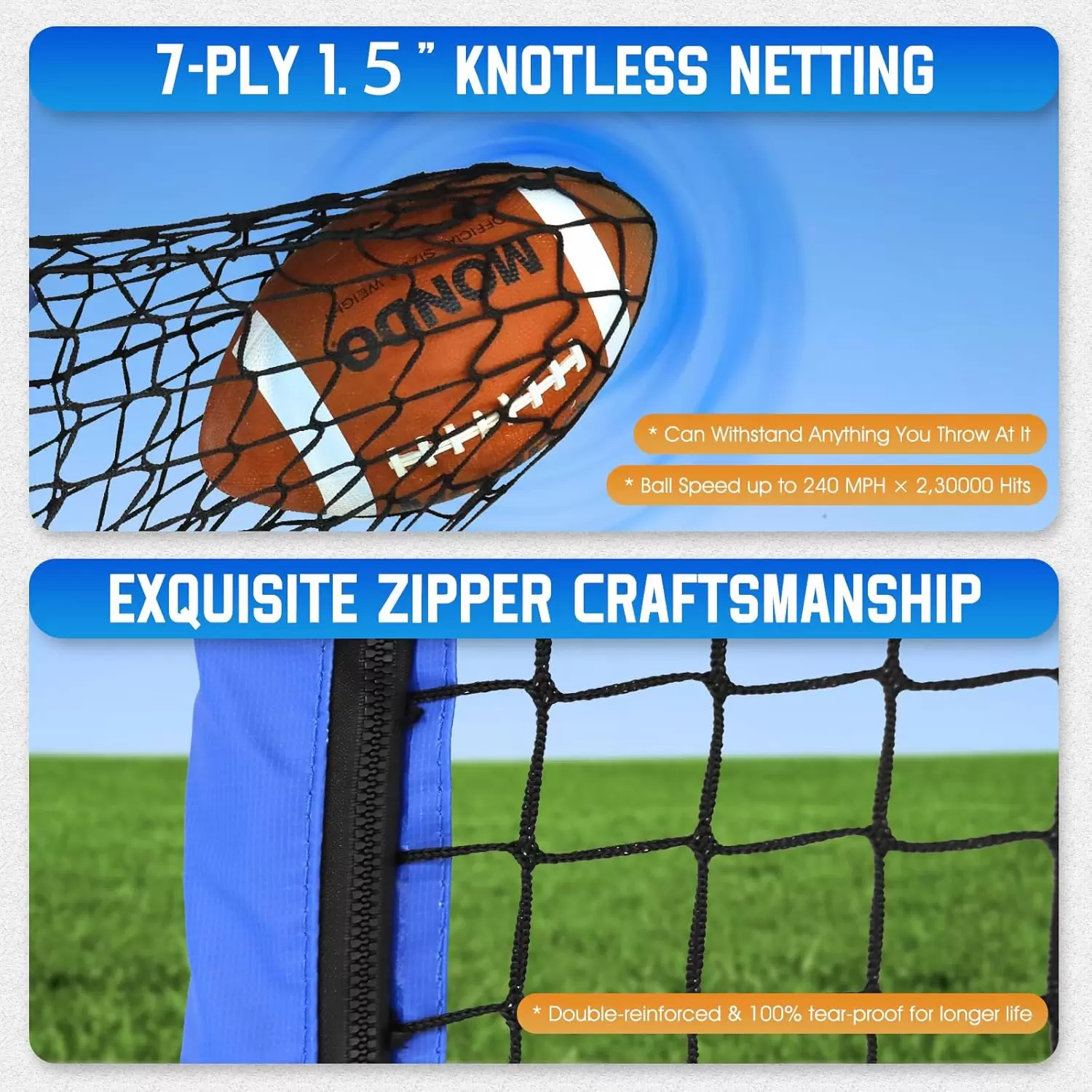
The 5-ply polyester netting used in professional-grade systems provides a controlled balance between elasticity and tensile strength, ensuring that repeated driver-level impacts do not compromise structural integrity.
Net Density Grading and Energy Distribution Mechanism
Unlike standard sports nets, golf protective barrier systems require graded density control, where different sections of the net may be engineered with varying tension thresholds depending on expected impact frequency and intensity.
In high-frequency impact zones (center strike areas), the net is reinforced with tighter mesh spacing to reduce deformation amplitude. Peripheral zones are designed with slightly more elastic properties to absorb angled or off-center shots.
This creates a multi-zone energy absorption field, where impact forces are distributed both horizontally and vertically across the structure.
The result is a controlled deceleration of golf ball velocity without sudden rebound instability, ensuring both player safety and structural longevity.
Structural Frame Stability and Load Transfer Engineering
The net system alone cannot guarantee safety without a properly engineered support structure.
A Best golf protective barrier net relies heavily on its frame system, which must resist both direct impact stress transfer and environmental load forces such as wind pressure.
The frame structure is typically designed using reinforced metal tubing systems that distribute load vertically into ground anchoring points while maintaining lateral rigidity.
Key engineering considerations include:
Frame torsional resistance under repeated ball impact
Load path continuity from net surface to ground anchors
Joint reinforcement to prevent micro-movement under vibration
Structural redundancy to maintain stability in case of localized stress failure
Riches Net utilizes automated pipe cutting, punching, and welding systems to ensure consistent frame geometry accuracy, which is critical for maintaining structural alignment in large-scale golf barrier installations.
Outdoor Durability and Environmental Resistance Engineering
Golf protective barrier systems are predominantly installed in outdoor environments where long-term exposure to UV radiation, rain, humidity, and temperature fluctuations can significantly degrade material performance.
To ensure long-term stability, professional systems incorporate:
UV-stabilized polyester fiber treatment to prevent photodegradation
Water-resistant coating layers to reduce moisture absorption
Corrosion-resistant frame coatings for metal components
Anti-fungal material treatment for high-humidity environments
Over time, untreated nets may experience fiber embrittlement, leading to reduced tensile strength and increased risk of sudden failure under impact load.
UV resistance is particularly critical because prolonged sunlight exposure can reduce fiber elasticity, directly affecting the net’s ability to absorb energy effectively.
Manufacturer Capability: Why Production Strength Defines Safety Performance
When evaluating a golf protective barrier net manufacturer in china, the key differentiation factor is not simply price or product availability, but the depth of manufacturing control over material properties and structural consistency.
Manufacturing capability directly affects:
1. Material Consistency and Strength Grading
High-quality manufacturers maintain strict control over polyester fiber thickness, weaving density, and tensile strength calibration. This ensures predictable performance under repeated impact conditions.
2. Custom Engineering Capability
Different golf facilities require different barrier configurations:
Driving ranges requiring high-height containment systems
Indoor simulator environments requiring compact safety enclosures
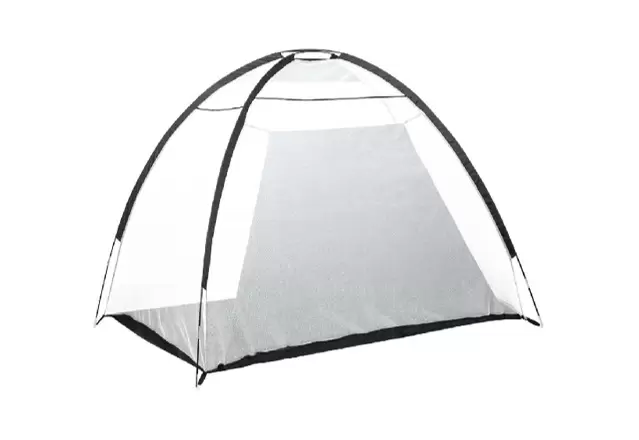
Backyard training setups requiring modular portable structures
Manufacturers with engineering capability can adapt net height, span width, and reinforcement density according to site-specific requirements.
3. Long-Term Structural Reliability
Advanced production systems ensure consistent welding accuracy and net tension calibration, reducing variability between batches and ensuring predictable long-term performance.
integrates full supply chain control from raw wire processing to finished net assembly, enabling stable production quality across large-scale and customized golf barrier systems.
Application Scenarios in Golf Training Environments
The Best golf protective barrier net is widely deployed across multiple operational environments, each with distinct performance requirements.
Commercial Driving Ranges
These environments require large-span barrier systems capable of handling continuous high-velocity ball impacts throughout operational hours.
Golf Training Academies
Focus is placed on controlled training environments where safety and repeated accuracy practice must coexist without structural degradation.
Indoor Golf Simulation Facilities
Require compact but highly durable net systems that can absorb repeated simulator-driven impacts in confined spaces.
Private Backyard Training Systems
Emphasize modular installation, ease of setup, and sufficient safety coverage for uncontrolled practice environments.
Selection Criteria for Professional Buyers
For procurement managers and facility designers, selecting the correct golf protective barrier system requires evaluation beyond surface-level specifications.
Key selection factors include:
Net tensile strength rating under repeated impact cycles
UV degradation resistance over multi-year exposure
Structural frame load distribution efficiency
Customization flexibility for facility geometry
Long-term maintenance and replacement cycle cost
The true performance of a barrier system is measured not at installation, but after thousands of repeated impact cycles in real operational environments.
Conclusion
The Best golf protective barrier net is a precision-engineered safety system designed to manage high-speed golf ball impact energy through structured material design, controlled tension distribution, and reinforced frame stability.
Understanding its performance requires evaluating not only material specifications but also structural engineering logic, environmental durability, and long-term manufacturing consistency.
At the manufacturing level, companies like Riches Net demonstrate how integrated production systems and 23+ years of engineering experience contribute to consistent, high-performance sports net solutions for global golf training environments.
For buyers evaluating a golf protective barrier net manufacturer in china, the most critical decision factor remains clear: the ability to deliver predictable safety performance under real-world high-impact, long-duration outdoor conditions.