In modern baseball training systems, pitching development has evolved from simple repetitive throwing into a data-driven precision control process, where every pitch is evaluated based on release consistency, trajectory control, and target accuracy feedback.
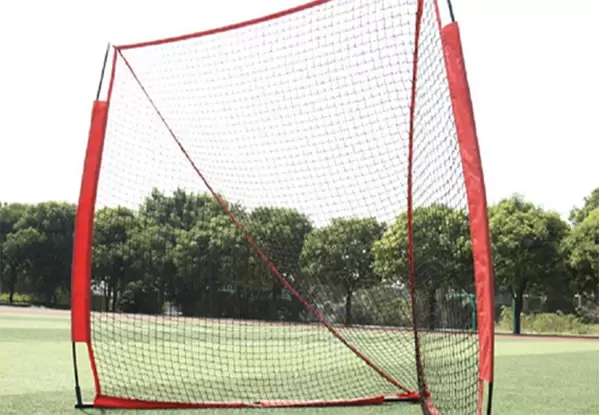
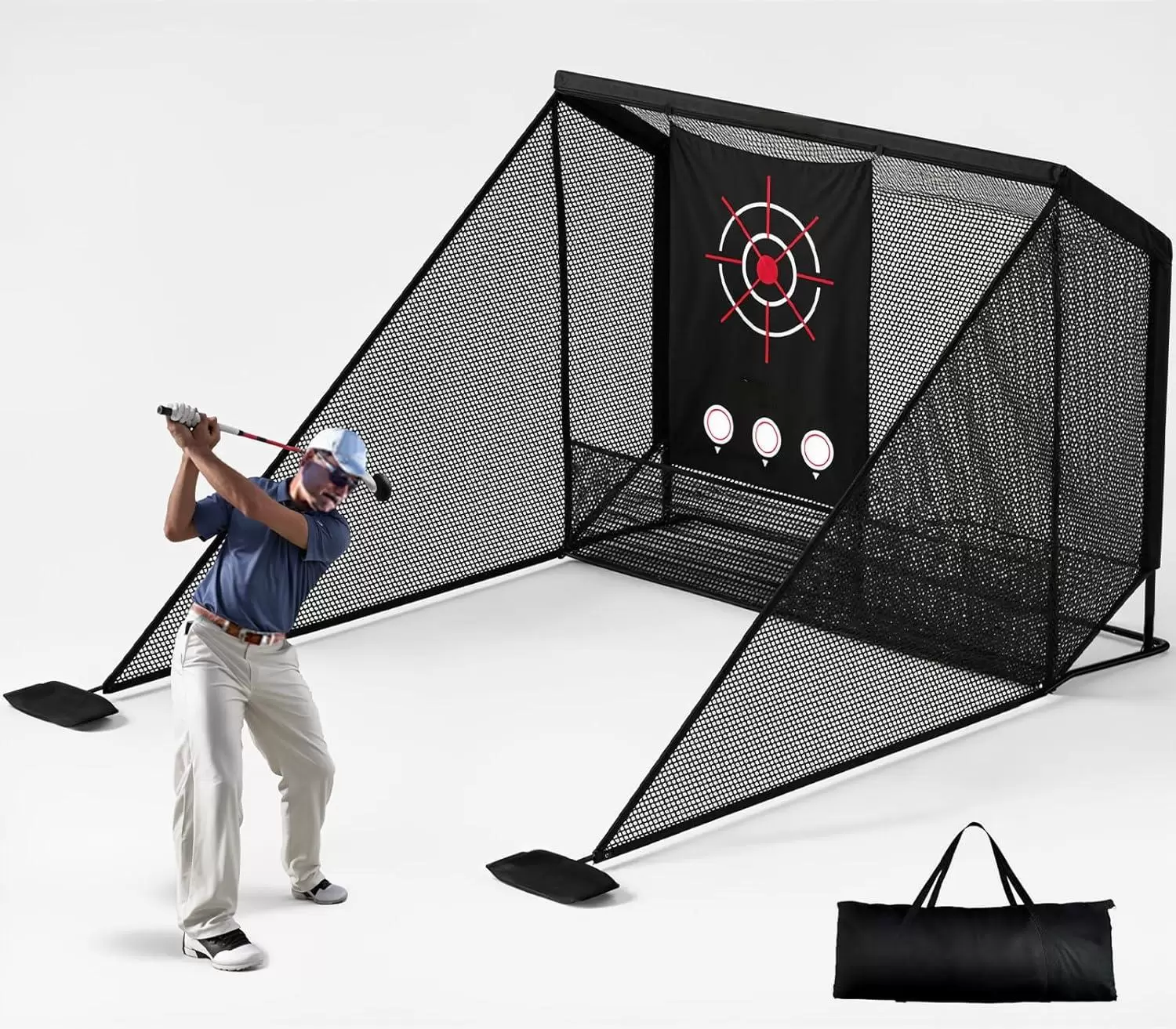
Within this framework, the Best baseball pitchers net is no longer a passive catching tool, but a structured training interface designed to simulate strike zone control, absorb high-speed impact forces, and provide immediate visual feedback for pitch correction.
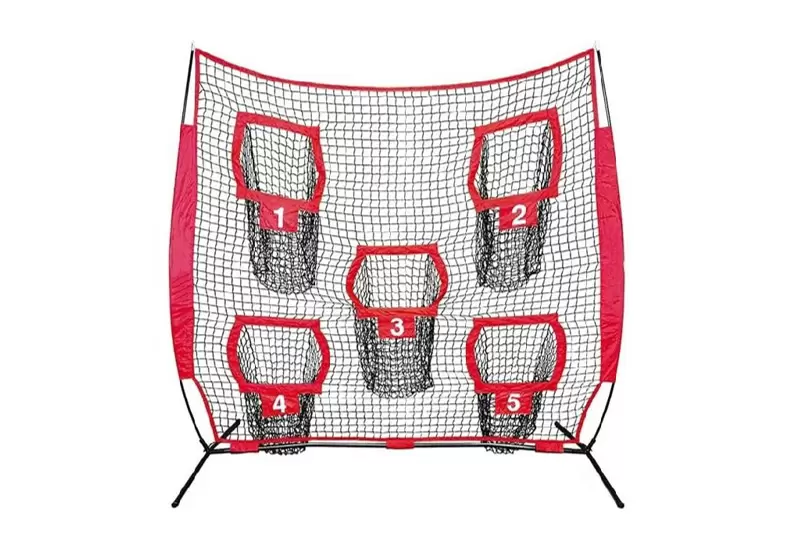
At the same time, the baseball pitching net 9 hole system introduces a more advanced segmented training methodology, enabling pitchers to isolate different pitch locations and systematically train control over high, middle, low, inside, and outside strike zones under repetitive high-intensity conditions.
For professional teams, academies, and training facilities, equipment selection is no longer based on basic durability alone. Instead, decision-making is driven by impact resistance stability, structural deformation control, target feedback clarity, and long-term material fatigue behavior under repeated pitching cycles.
In this industrial sports equipment ecosystem, Riches Net plays a key role as a manufacturer with over 23 years of experience in sports net engineering, integrating wire production, net weaving systems, and metal frame fabrication into a unified production chain.
Established in 2000, Huizhou Riches Net Science & Technology Co., Ltd. has developed a complete manufacturing system covering automatic pipe processing, net structure design, and customized sports training equipment production, ensuring consistent performance across high-frequency training environments.
Engineering Structure of Best Baseball Pitchers Net Systems
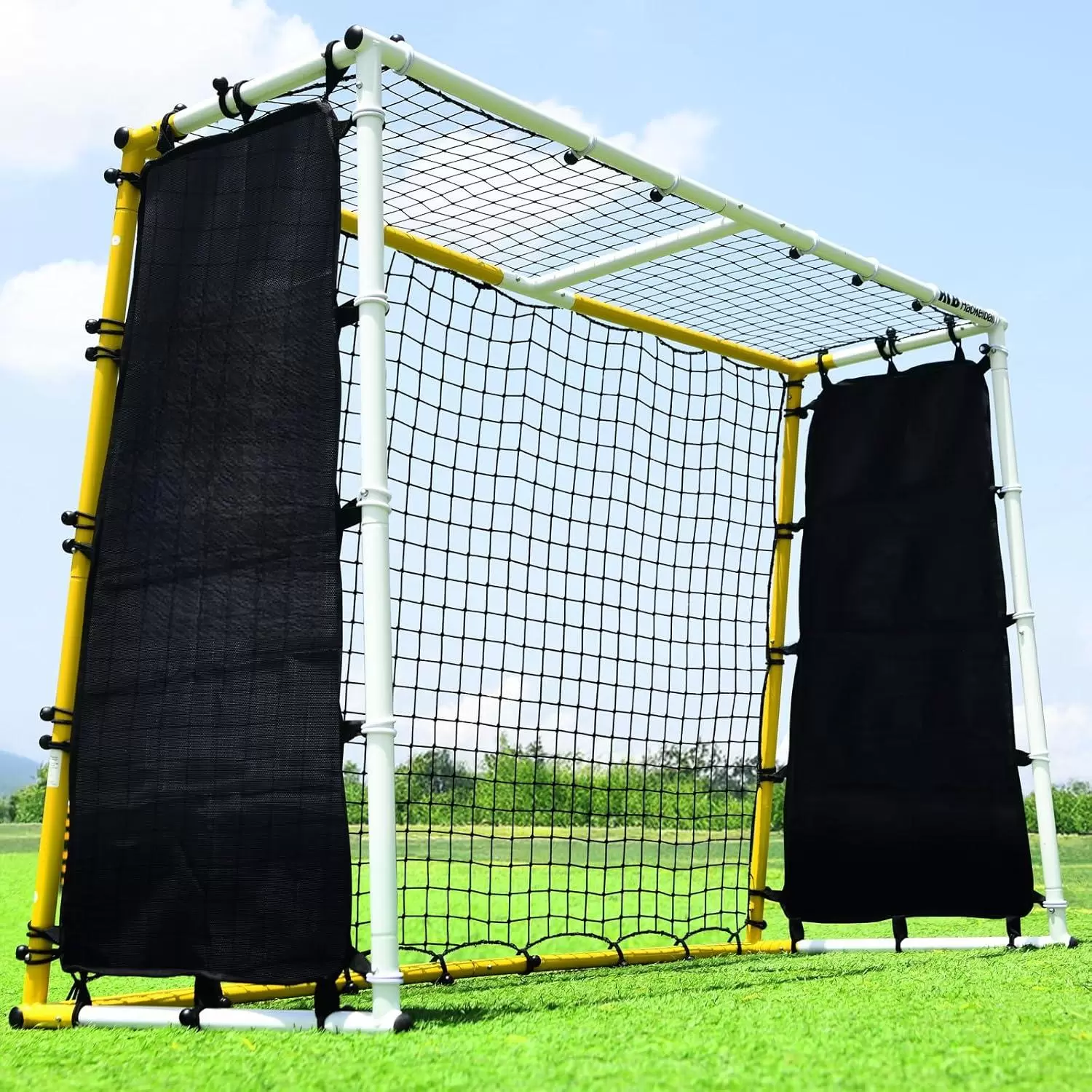
The Best baseball pitchers net is structurally designed as a high-impact absorption system that converts kinetic energy from fastball impacts into distributed tension across a reinforced net matrix supported by a rigid frame structure.
Unlike recreational nets, professional pitching nets must withstand repeated ball impacts at high velocities without deformation, frame shifting, or tension imbalance, which directly affects training accuracy and structural longevity.
The system typically consists of three core engineering layers: a reinforced metal frame structure, a tension-optimized net surface, and a stability anchoring base that ensures the entire system remains fixed under repeated dynamic loads.
Each component plays a specific role in ensuring that the net maintains geometric stability even after thousands of repeated pitching cycles, which is essential for consistent training feedback and long-term durability.
Impact Resistance Design: Structural Stability Under High-Speed Pitching
One of the most critical engineering challenges in a Best baseball pitchers net system is managing repeated high-speed ball impacts without structural fatigue or deformation.
When a baseball is thrown at competitive pitching speeds, the net must absorb instantaneous kinetic energy and distribute it evenly across multiple tension points to prevent localized stress concentration.
This is achieved through controlled tension distribution design, where the net mesh is engineered to maintain uniform elasticity across all contact points, ensuring that no single section bears excessive load during repeated impact cycles.
The supporting frame structure, typically constructed from reinforced steel or high-strength alloy tubing, is designed to resist lateral displacement and torsional stress, ensuring that repeated impacts do not gradually weaken the overall structural geometry.
Material Durability and Long-Term Training Stability
In professional training environments, equipment is often subjected to continuous daily use, requiring materials that can maintain performance stability over extended time periods without significant degradation.
The net material used in Best baseball pitchers net systems must balance elasticity and tensile strength, ensuring that it can absorb repeated impacts while maintaining consistent rebound behavior and shape integrity.
UV resistance and weather durability are also critical factors, especially for outdoor training environments where exposure to sunlight, humidity, and temperature fluctuations can accelerate material fatigue.
Frame joints and connection points must be engineered to prevent micro-loosening under vibration stress caused by continuous pitching cycles, ensuring that long-term structural alignment remains stable without requiring frequent recalibration.
Riches Net integrates fully automated pipe processing and welding systems to ensure consistent dimensional accuracy and structural reinforcement across all training net frameworks, improving long-term reliability in high-frequency training environments.
Pitching Feedback Mechanism and Training Logic
A key functional advantage of the Best baseball pitchers net lies in its ability to provide immediate visual feedback on pitch accuracy, allowing athletes to adjust mechanics in real time based on observed landing positions.
Unlike traditional catching methods, structured pitching nets are designed with clearly defined target zones that allow pitchers to evaluate deviation patterns in real time, improving neuromuscular adaptation and release consistency.
This feedback loop is essential in professional pitching development, where small deviations in wrist angle, release timing, or shoulder rotation can significantly impact pitch trajectory and strike zone accuracy.
By repeatedly training against a stable and visually defined target structure, pitchers develop improved muscle memory alignment and more consistent mechanical execution.
Baseball Pitching Net 9 Hole: Multi-Zone Target Training System
The baseball pitching net 9 hole system represents an advanced evolution of pitching training equipment, introducing a structured nine-zone target matrix that divides the strike area into multiple precision control zones.
Each of the nine target holes corresponds to a specific pitching location, typically segmented into upper, middle, and lower zones combined with inside and outside strike regions, allowing for comprehensive control training across the full strike zone spectrum.
This structure enables pitchers to isolate specific pitch types and refine directional accuracy under controlled training conditions, significantly improving pitch placement consistency and tactical variation capability.
The system is particularly effective for training:
Fastball location control under high-speed release conditions
Curveball and breaking ball directional accuracy adjustment
Inside/outside pitch differentiation for batter disruption strategy
Vertical pitch control for high and low strike zone targeting
Engineering Logic Behind 9-Hole Target Segmentation
The effectiveness of the baseball pitching net 9 hole system is not based on visual segmentation alone, but on structured training logic that reinforces cognitive and motor coordination between pitch intention and physical execution.
Each target zone is engineered to provide consistent visual contrast, ensuring that pitchers can instantly identify deviation patterns and adjust subsequent throws accordingly.
From a mechanical standpoint, the segmentation system must maintain structural independence between zones to prevent tension transfer interference, ensuring that repeated impacts on one section do not distort adjacent target areas.
This is particularly important in high-frequency training environments where hundreds of repeated throws are executed in a single session, requiring stable zone definition without material drift or deformation.
Training Efficiency and Pitching Skill Development Logic
The integration of multi-zone target systems significantly enhances pitching development efficiency by transforming generic throwing practice into structured precision training.
Instead of focusing solely on speed or repetition, pitchers are able to systematically train directional control, improving both consistency and tactical pitch variation across different game scenarios.
This structured approach enables measurable improvements in:
Strike zone consistency under pressure conditions
Pitch location repeatability across identical grip and release mechanics
Adaptive control for batter-specific targeting strategies
Reduced mechanical deviation under fatigue conditions
Structural Stability in Repetitive Training Environments
In long-duration training scenarios, structural fatigue becomes a critical factor influencing equipment performance consistency.
Repeated high-force impacts can gradually alter frame alignment, net tension distribution, and anchor stability if the system is not properly engineered for long-term load cycling.
To prevent this, professional-grade pitching nets are designed with reinforced joint systems and load-dispersing frame geometry that minimizes stress concentration at any single structural point.
applies automated welding, precision cutting, and controlled assembly processes to ensure that each structural component maintains consistent dimensional integrity, supporting stable performance even under continuous high-impact training conditions.
Application Scenarios in Professional Training Systems
Best baseball pitchers net and baseball pitching net 9 hole systems are widely used across multiple training environments, including:
Professional baseball academies focusing on pitching mechanics development
School-level competitive training programs emphasizing strike zone control
Athlete rehabilitation systems requiring controlled throwing intensity
Private training facilities specializing in pitching accuracy refinement
In each scenario, the primary objective is not simply repetition, but structured performance improvement based on measurable accuracy feedback and mechanical consistency.
Conclusion
The evolution of the Best baseball pitchers net and baseball pitching net 9 hole systems reflects a shift in modern baseball training from repetitive practice to precision-based mechanical optimization.
Understanding these systems requires analyzing not only physical durability, but also impact absorption engineering, target segmentation logic, and feedback-driven training methodologies that directly influence pitching performance development.
Manufacturers such as Riches Net continue to enhance sports net engineering through integrated production systems, automated pipe processing, and precision net manufacturing, ensuring that training equipment maintains structural stability and functional accuracy across long-term high-intensity usage environments.